
 AI Summary
Gruha Jyothi application is now open on the official portal at sevasindhugs.karnataka.gov.in. Gruha Jyothi is a flagship scheme by the Karnataka government, giving big help to households on their electricity bills. Around 1.6 crore beneficiaries across Karnataka are currently getting free electricity of up to 200 units under this scheme every month.
If you are a permanent resident of Karnataka and meet the rules, you can apply online through the Seva Sindhu portal and start saving on your electricity bills. The application process is simple and can be done from home without visiting any government office.
How to Apply for Gruha Jyothi Online via Seva Sindhu
Applying for Gruha Jyothi scheme is simple through the Seva Sindhu portal. Follow these steps to complete your application online:
STEP 1: To start your Gruha Jyothi application, visit the official Seva Sindhu website. Applying online saves you the trouble of visiting government offices.
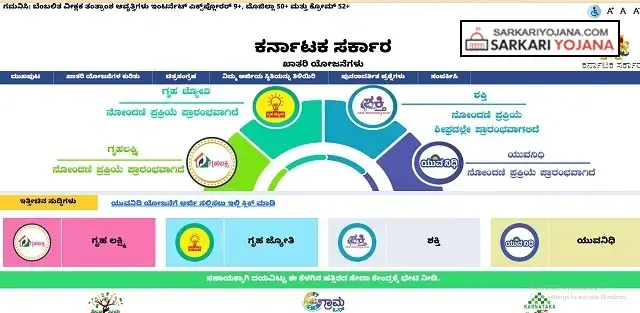
STEP 2: On the Seva Sindhu portal Karnataka homepage, find and click on the option for the Gruha Jyothi scheme. This will open the online registration form.
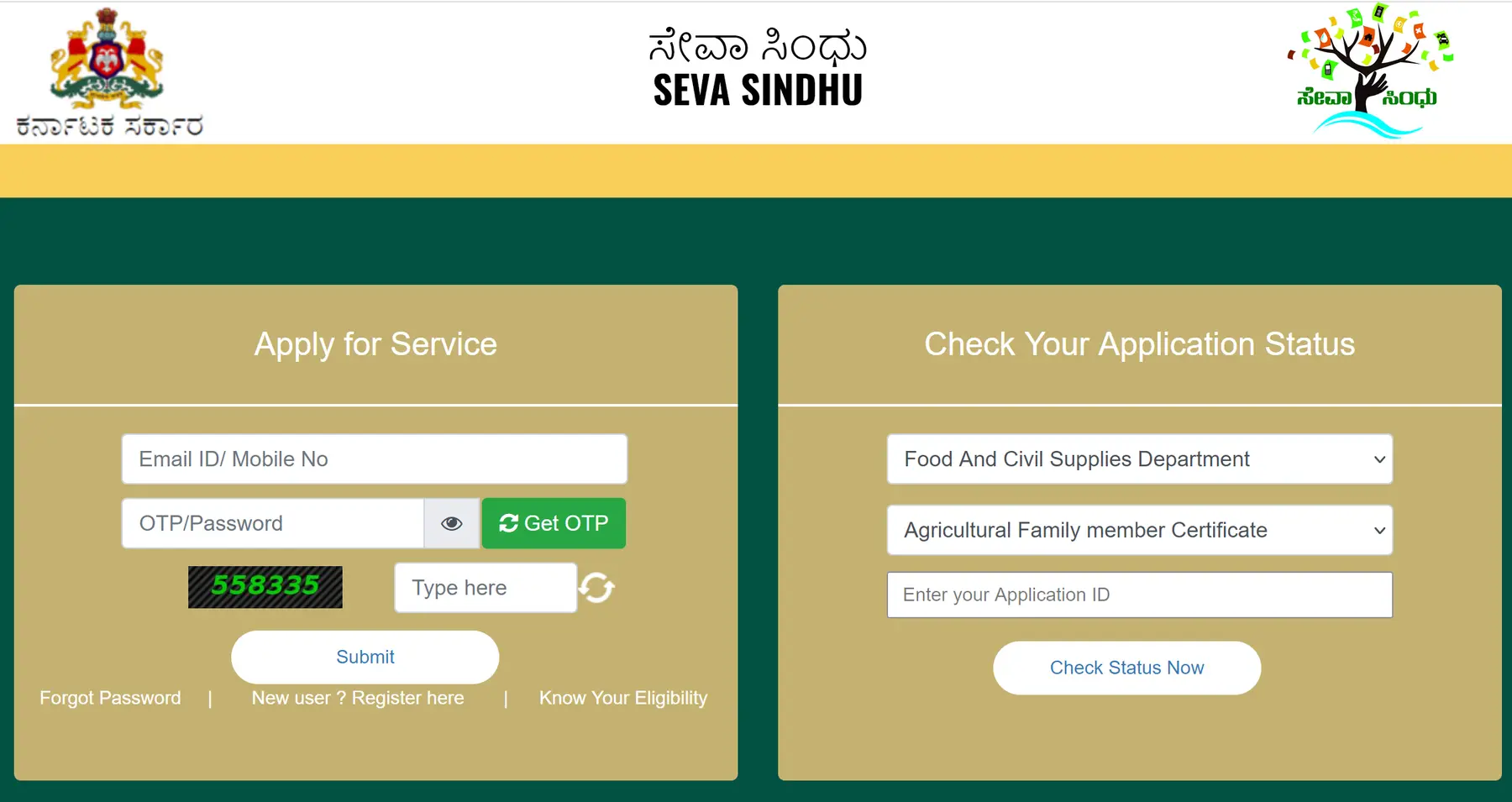
STEP 3: Once the registration form page opens, choose your preferred language and fill out the application form carefully.
STEP 4: Choose your ESCOM (Electricity Supply Company) name from options like BESCOM, CESE, GESCOM, HESCOM, MESCOM, and HRECS. Then enter your Application ID and Connection ID.
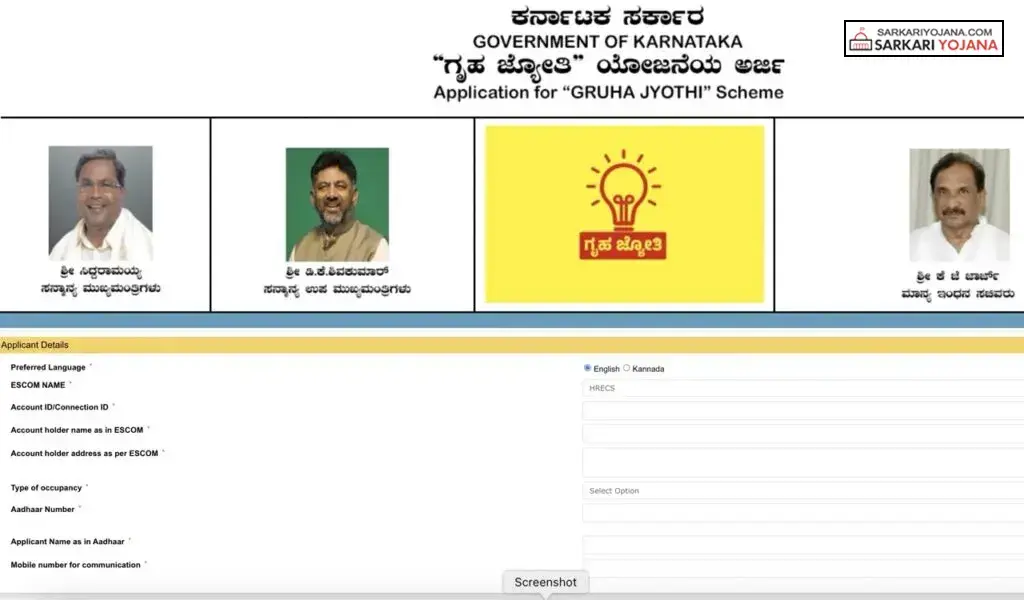
STEP 5: Fill in all required details correctly, including your type of occupancy, Aadhaar number, and applicant name exactly as it appears on your Aadhaar card.
STEP 6: After entering all details, check them carefully. Then check the declaration box, enter the captcha code, and click 'Submit' to finish your application.
Eligibility for Gruha Jyothi
To be eligible for Gruha Jyothi, you need to meet a few basic rules set by the Karnataka government. Here is who can apply:
- You must be a permanent resident of Karnataka state.
- Your name must be in the Karnataka electoral roll. From 2026, the state government has linked guarantee scheme benefits to the voter list, so only people whose names appear in the electoral roll will get Gruha Jyothi benefits.
- Your average monthly electricity use should be 200 units or less over the last 12 months.
- The scheme is only for residential electricity meter connections, not commercial ones. If you are using a home connection for any commercial purpose, you will not be eligible.
- Only one electricity connection per person is allowed under the scheme. Having multiple meters under your name can get your application rejected or cancelled.
- Tenants living in rented homes with a valid Aadhaar card and electricity meter connection may also be eligible, but the government is now reviewing tenant applications more carefully.
Benefits of Gruha Jyothi Scheme
- Eligible households get free electricity up to 200 units each month, directly reflected in their electricity bill.
- This scheme helps residents cut down their electricity costs greatly, leading to big household savings.
- Karnataka government promotes responsible electricity use and environmental protection through this scheme.
- Around 1.6 crore households are currently getting this benefit every month across the state.
Required Documents for Gruha Jyothi Application
- Aadhaar Card
- Email ID
- Mobile Number
- Latest Electricity Bill
- Address Proof
- PAN Card
What is Gruha Jyothi Scheme
Gruha Jyothi is a flagship Karnataka government scheme launched to help households save on electricity bills by giving free electricity up to 200 units per month. The scheme started in 2023 and has since grown to cover over 1.6 crore beneficiaries across the state. For 2026-27, the Karnataka government has set aside Rs 51,286 crore for all five of its guarantee schemes together, which includes Gruha Jyothi.
To get the benefit, your average monthly electricity use over the past 12 months must be 200 units or less. This mainly helps residential households across Karnataka save money on their power bills every month.
CM Shivakumar Orders Beneficiary Verification in 2026
In June 2026, newly sworn-in Karnataka Chief Minister D.K. Shivakumar ordered a statewide review of Gruha Jyothi beneficiaries after assuming office. He was clear that the scheme will not be rolled back, but that a cleanup of ineligible beneficiaries is needed.
The CM said the government had received complaints and petitions about misuse of the scheme. Some people had taken residential electricity connections but were actually using them for commercial activities. Others had multiple electricity meters registered in their name. "We have recorded 1.6 crore beneficiaries under the electricity scheme. We will check their connections, whether residential premises are being used for commercial purposes, and whether someone has multiple meters in their name," he said at a press conference at Vidhana Soudha.
Senior officials have been given 15 days to submit reports on implementation and ongoing challenges. The government says the goal is not to cut the scheme but to make sure benefits only reach genuinely eligible households. People using electricity connections for purely residential purposes will not be affected.
Voter List Now Linked to Gruha Jyothi Benefits
Karnataka Chief Minister D.K. Shivakumar has said that only voters whose names are in the electoral roll will get benefits under the state guarantee schemes, including Gruha Jyothi. During a review meeting at Vidhana Soudha, he asked officials to make sure no eligible family is left out, while also stopping ineligible people from misusing the scheme. So if you want to keep getting free electricity, your name should be in the Karnataka voter list.
With the Special Intensive Revision (SIR) of electoral rolls going on in the state, the CM has asked beneficiaries to check that their names are not removed from the voter list during this exercise. If your name gets dropped during SIR, you could lose your Gruha Jyothi benefit, so it is worth checking your status on the electoral roll now. You can verify your name in the voter list through the official ECI portal or the Karnataka CEO website.
The government has also found that some voters from other states were getting Gruha Jyothi benefits in Karnataka. The CM said the scheme should only help Karnataka beneficiaries, and benefits going to out-of-state voters or bank accounts outside Karnataka will be stopped. Officials flagged cases of UPI account misuse and transfers to accounts outside the state, and the CM directed that such flows be halted.
Affidavit Rule for Tenants Living in Rented Homes
Speaking in Delhi during the NITI Aayog meeting, CM D.K. Shivakumar announced that Gruha Jyothi beneficiaries living in rented houses may soon need to submit an affidavit. This affidavit will confirm that the tenant is not claiming the subsidy illegally or for more than one household. He said the government will bring in this check soon, and made it clear that the move is meant to remove ineligible claims, not to reduce the number of genuine beneficiaries.
During the same announcement, the CM shared an example of misuse found during the review, where one person had six electricity meters registered in his name. He said some people are using residential connections for shops and business establishments, which is not allowed under the scheme. "There is no objection if this scheme is used for residential homes," he said. The government is also checking cases linked to deceased beneficiaries, where the electricity connection is still active and the registered mobile number belongs to someone else.
Contact and Helpline
For any questions or support regarding Gruha Jyothi scheme, you can reach out through the official Seva Sindhu portal or by contacting the electricity board in your area.
Contact Numbers of Seva Sindhu Portal: 08022279954 / 8792662814 / 8792662816
FAQ's
Who can get the benefits of Gruha Jyothi Scheme?
All permanent residents of Karnataka with a residential electricity meter connection and an average monthly use of 200 units or less can get Gruha Jyothi benefits.
What benefits are given under Gruha Jyothi Scheme?
Selected applicants get free electricity for up to 200 units per month, directly shown in their electricity bill.
Where is the application form for Gruha Jyothi available online?
The application form is available on the Seva Sindhu Karnataka portal at sevasindhugs.karnataka.gov.in.
Is there an income limit to apply for Gruha Jyothi?
No specific income limit is mentioned. The main rules are being a Karnataka resident and having an average monthly use of 200 units or below. However, those using connections for commercial purposes or having multiple meters may now be removed after the 2026 verification drive.
Can tenants apply for Gruha Jyothi?
Yes, tenants in rented homes with a valid Aadhaar card and an electricity meter connection are eligible. However, the Karnataka government has announced that such tenants may soon need to submit an affidavit confirming they are not claiming the subsidy illegally or for more than one household, as part of the 2026 verification drive.
Will Gruha Jyothi be cancelled or rolled back in 2026?
No. CM D.K. Shivakumar has clearly said there will be no rollback of guarantee schemes including Gruha Jyothi. The 2026 review is only to remove ineligible beneficiaries and stop misuse, not to cancel the scheme.
Is voter list name required for Gruha Jyothi now?
Yes. From 2026, the Karnataka government has linked guarantee scheme benefits to the electoral roll. Only people whose names are in the voter list will get Gruha Jyothi benefits, so you should make sure your name stays on the roll during the ongoing SIR exercise.
Do tenants need to submit an affidavit for Gruha Jyothi now?
The Karnataka government has announced that this affidavit requirement for tenants will be brought in soon, but it has not been implemented yet. Once it starts, renters claiming Gruha Jyothi will need to submit an affidavit confirming the connection is not being used illegally or for more than one household.