

 AI Summary
Central government of GOBARdhan (Galvanizing Organic Bio-Agro Resources Dhan) scheme is accepting online registration for biogas, CBG and Bio-CNG plants. Union Cabinet approved GOBARdhan as the National Circular Bioenergy Scheme on 6 August 2026 with a total outlay of ₹23,731 crore, to be spent from FY 2026-27 to FY 2035-36. The plan is to grow India's compressed biogas (CBG) output nearly ten times by turning cattle dung, crop residue, press mud and wet city waste into clean gas and organic manure.
GOBARdhan was first announced by the then Finance Minister Arun Jaitley on 1 February 2018 under the Swachh Bharat Mission (Grameen). It converts animal dung, kitchen leftovers, crop residue and market waste into biogas and bio-slurry, which keeps villages clean and gives farmers extra income. Registration stays open all year on the GOBARdhan portals, and there is no fee for it.
GOBARdhan Scheme Online Registration
Registration is online and free. Two separate portals run now, so pick the right one before you start. Biogas plants go to the Department of Drinking Water and Sanitation portal at gobardhan.sbm.gov.in. Compressed biogas projects go to the Ministry of Petroleum and Natural Gas portal at gobardhan.eil.co.in. Registering on the wrong one only wastes your time.
STEP 1 - Open gobardhan.sbm.gov.in and click on the 'Register' button in the top menu. Read the short 'About this registration' page that opens, because it tells you the smallest plant size allowed. For biogas plants, designed gas output has to be 10 cubic metre per day or more.
STEP 2 - Click on 'Click here to Register' and fill the form with plant details. You will need the plant location down to district and block, planned or installed capacity, the type of feedstock you will use, and the name of the government or private body that owns the plant.
STEP 3 - Enter your identity and business details. Aadhaar is enough for an individual owner. A company, society or cooperative has to give its registration number or CIN, PAN and GST number.
STEP 4 - Submit the form and write down the registration number that the portal gives you. That number gets checked later when you claim Market Development Assistance on manure sales or ask for support from other departments. CBG project owners do the same thing on the CBG portal, which also runs its own windows for pipeline and biomass machinery support.

Highlights of GOBARdhan Scheme
| Detail | Information |
|---|---|
| Scheme Name | GOBARdhan (Galvanizing Organic Bio-Agro Resources Dhan) |
| New Full Name | National Circular Bioenergy Scheme |
| Cabinet Approval | 6 August 2026 |
| Level | Central |
| Total Outlay | ₹23,731 crore |
| Scheme Period | FY 2026-27 to FY 2035-36 |
| Nodal Ministry | Ministry of Petroleum and Natural Gas (CBG part), Ministry of Jal Shakti (village biogas part) |
| Who Can Apply | Households, gram panchayats, cooperatives, gaushalas, dairies, MSMEs and private companies |
| Fixed CBG Price | ₹2,110 per MMBTU |
| Application Mode | Online |
| Official Websites | gobardhan.sbm.gov.in and gobardhan.eil.co.in |
What Cabinet Approved in August 2026
Older support for compressed biogas came in pieces. One scheme paid for manure sales, another for machinery, another for pipelines. The new scheme puts all of it under one roof so a plant owner deals with a single set of rules. Six parts make up the scheme.
- Assured offtake: city gas distribution companies have to buy CBG to meet the notified blending obligation of 3 percent in FY 2026-27, 4 percent in FY 2027-28 and 5 percent from FY 2028-29 onwards in transport CNG and household PNG. This gives producers a buyer they can count on.
- Fixed price: CBG will sell at an administered rate of ₹2,110 per MMBTU, and the pricing rule stays for at least ten years, so plant owners can plan their income.
- Capital support: new CBG projects get up to ₹2 crore per tonne per day of installed capacity. Money also covers feedstock collection and manure processing assets, not only the main machinery. Old plants adding capacity can apply too.
- Pipeline work: cluster and standalone pipelines will connect plants to trunk lines and city gas networks, which cuts the cost of moving gas by truck.
- Credit guarantee: a separate guarantee cover of up to 85 percent makes banks more willing to lend to MSME-run projects.
- CBG Ecosystem Challenge Fund: money for district-level planning, feedstock mapping, training and public information work.
Benefits for Villages and Farmers
The village side of GOBARdhan still runs under Swachh Bharat Mission Grameen Phase II, where it sits inside solid waste management. Cattle dung, kitchen waste, crop leftovers and market waste go into a digester and come out as gas and slurry. Gas replaces LPG or firewood in the kitchen. Slurry goes back to the field as manure. Gains show up both at home and across the village.
- Lower fuel bills: a working household plant cuts down LPG refills through the year and saves cash every month.
- Cleaner village: dung heaps near homes go away, so flies and mosquito breeding spots also drop.
- Free manure: bio-slurry from the digester works as organic manure and reduces spending on chemical fertiliser.
- Extra income: self-help groups, milk unions and small operators earn from collecting dung, running plants and selling manure.
- Less field burning: paddy straw and other leftovers get a paying buyer instead of being burnt, which adds to crop residue management support already running in states like Punjab.
- Smaller import bill: every unit of CBG made at home replaces gas that would have been bought from outside.
Who Can Apply and Under Which Model
Four models run under the village part of the scheme, and the right one depends on how much waste you can collect daily.
- Individual household model: for a family picked by the gram panchayat that keeps enough cattle at home to feed a small plant.
- Cluster model: a group of households working with a dairy cooperative, milk union or farmer producer organisation. Three to four cattle per household is the usual bar.
- Community model: one shared plant for the village, run by the gram panchayat with dung collected from many homes.
- Commercial model: big CBG plants set up by companies, gaushalas, dairies and MSMEs. This is the part covered by the new ₹23,731 crore scheme.
Villages with more cattle get first preference when projects are picked, so a place with a large dairy or gaushala nearby has a better chance.
Money Support You Can Get
Support comes from more than one department, so read this part slowly. Under Swachh Bharat Mission Grameen Phase II, every district gets up to ₹50 lakh for community and cluster biogas plants, and this window runs till 2026-27. Ministry of New and Renewable Energy gives central financial support for small plants of 1 to 25 cubic metre per day, with 20 percent extra for the North East, island areas, registered gaushalas and SC or ST applicants.
Once a plant starts selling manure, Market Development Assistance of ₹1,500 per tonne applies on Fermented Organic Manure, Liquid Fermented Organic Manure and Phosphate Rich Organic Manure. Two conditions come with it. The plant must be registered on the GOBARdhan portal, and the manure has to meet Fertilizer Control Order standards. Bigger projects can also use the Agriculture Infrastructure Fund, which gives a 3 percent interest subsidy on loans up to ₹2 crore for seven years.
Documents Required
Paper work is light for a household plant and heavier for a company. An individual needs an Aadhaar card, papers for the land or space where the plant will stand, and a bank passbook for the subsidy payment. A company, society or cooperative has to add its CIN or registration number, PAN, GST number, plant or project details and a financial statement. Keep your GOBARdhan registration number with these papers, because almost every later claim asks for it.
Where the Scheme Stands Now
Portal figures show 1,750 registered biogas plants, of which 1,286 are working and 205 are being built. On the CBG side, 1,215 plants are registered, 163 are working and 253 are under construction. District coverage stands at 570 for biogas and 220 for CBG. Government says more than 200 CBG plants have been commissioned so far through SATAT and the older support schemes, and that base is what the new ten-year scheme builds on.
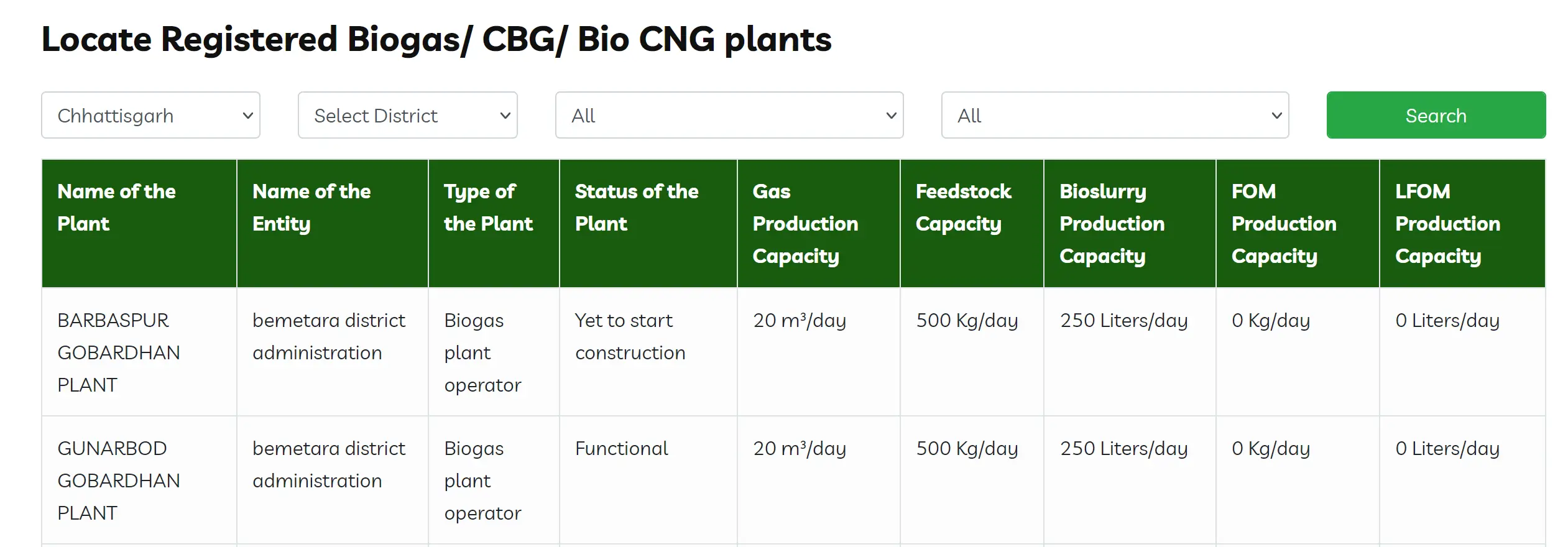
How to Download GOBARdhan Registration Certificate
A registration certificate is issued to every successfully registered plant, and it can be downloaded from the official GOBARdhan portal.
To download the GOBARdhan registration certificate, visit this link: gobardhan.sbm.gov.in/registration-certificate
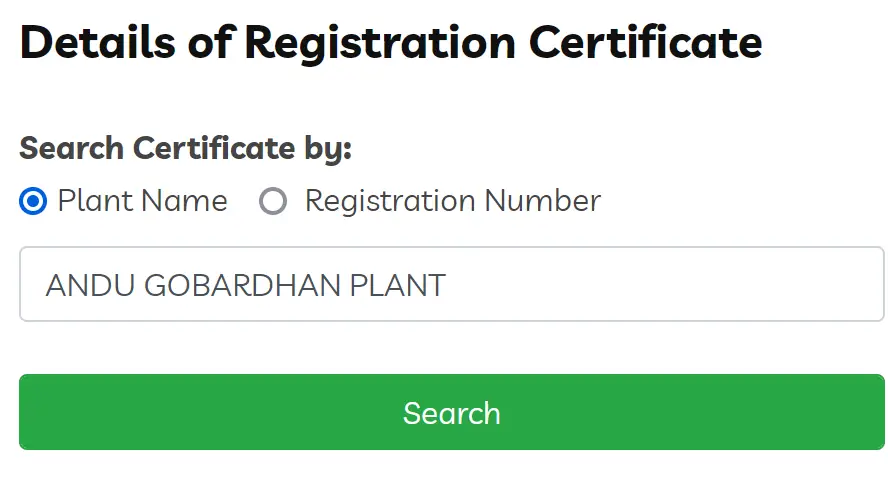
Now enter the name of your plant or the registration number and click "Search". After clicking on search, the download link of the certificate will appear and you can click that link to download the PDF of your registration certificate.
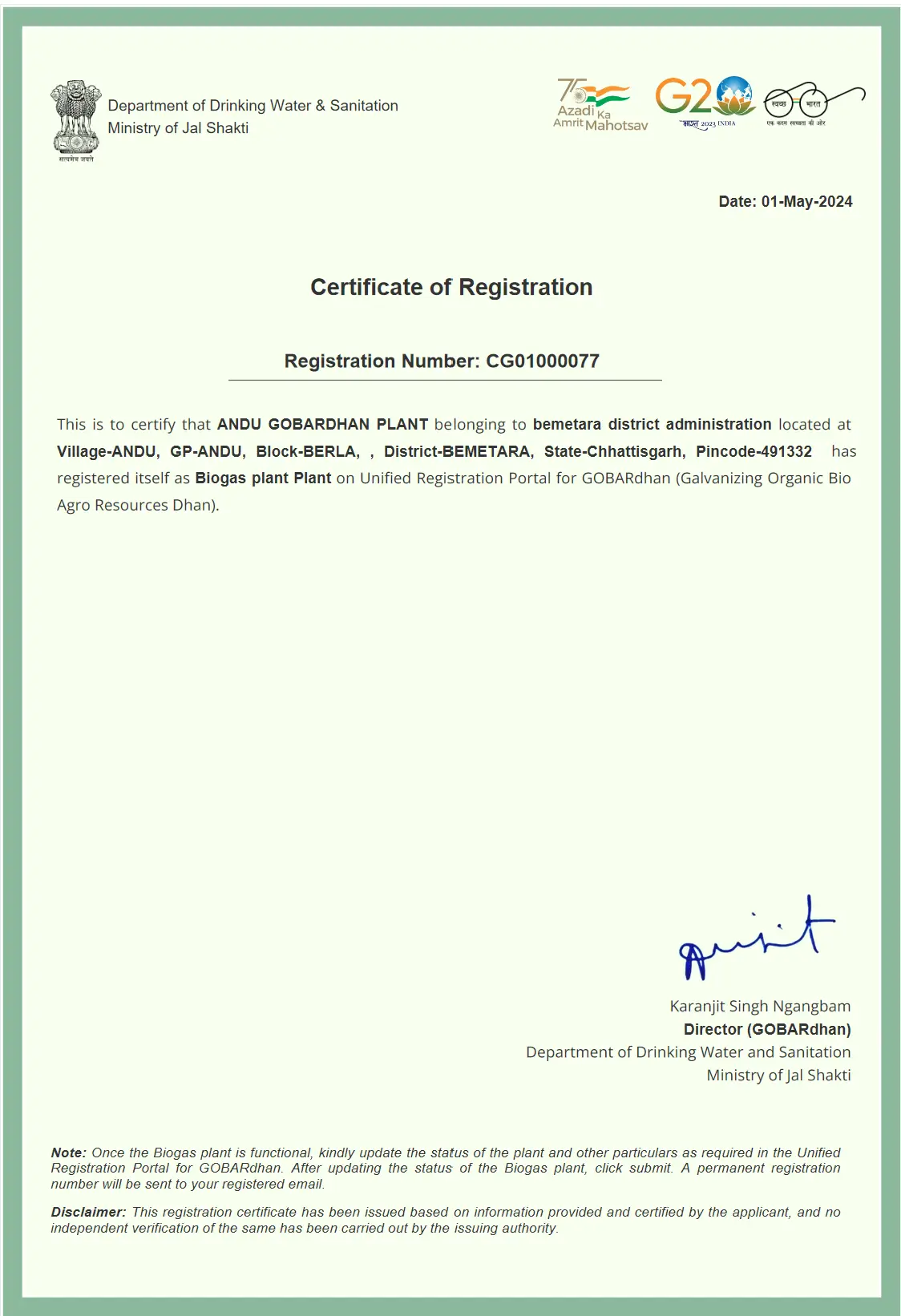
GOBARdhan registration certificate appears as below.
Objectives of GOBARdhan Scheme
The main objectives of the GOBARdhan Scheme are to increase rural income, create rural jobs and keep villages clean. The scheme aims to:
- Support villages in safely managing their cattle waste, agricultural waste and, in the long run, all organic waste.
- Help communities convert their cattle and organic waste into wealth using local systems.
- Promote environmental sanitation and curb vector borne diseases through proper disposal of waste in rural areas.
- Convert organic waste, especially cattle waste, into biogas and fertiliser for use in rural areas.
GOBARdhan Impact on Gram Panchayats
GOBARdhan aims to positively impact the gram panchayats with 3Es, which are as follows:
- Energy: self-reliance with respect to energy through use of agricultural and animal waste to generate bio-energy through biogas plants.
- Empowerment: engaging rural people, especially women self-help groups, in construction, management and day to day operations of biogas plants.
- Employment: generating jobs among rural youth and women through collection of waste, transportation to treatment plants, management of the plant, and sale and distribution of the biogas generated.
FAQ's
What is the full form of GOBARdhan?
GOBARdhan stands for Galvanizing Organic Bio-Agro Resources Dhan. After the August 2026 Cabinet approval it is also called the National Circular Bioenergy Scheme.
Which website is used for GOBARdhan registration?
Two websites, depending on your plant. Biogas plants register at gobardhan.sbm.gov.in run by the Department of Drinking Water and Sanitation. Compressed biogas projects register at gobardhan.eil.co.in run by the Ministry of Petroleum and Natural Gas.
Is there any fee for GOBARdhan registration?
No. Registering a plant on the portal is free. Costs come only at the construction stage, and part of that is covered by subsidy.
What is the smallest biogas plant that can be registered?
Designed gas output has to be 10 cubic metre per day or more to register on the biogas portal. Smaller family plants of 1 to 25 cubic metre can still get subsidy through the Ministry of New and Renewable Energy biogas programme.
What price will CBG producers get?
₹2,110 per MMBTU under the fixed price set by the government. This rate is backed by a pricing rule that runs for at least ten years, which is meant to give lenders and investors some certainty.
Do city gas companies have to buy CBG?
Yes. The blending obligation is 3 percent in FY 2026-27, goes to 4 percent in FY 2027-28 and reaches 5 percent from FY 2028-29 in transport CNG and household PNG.
Pmay
Very good scheme for farmers
Pradip kumar
baibaha
bidhoona
auraiya up
So nice
Very good scheme for farmers
VILL- DHAKURIA ,POST- DHAKURIA KALI BARI
DIST-24 PARGANAS NORTH
PIN-743245
WEST BENGAL
Full financial support for construction of Bio Gas Plant to be provided to farmers. It will be a unique scheme.Similar work, already done are to be appreciated and focussed.
Full financial support for Bio Gas Plant to be given to farmers. It will be a unique scheme. Similar work already done to be appreciated and focused.
sir I am from karnataka Ihave 25 cattles in my farmhouse ,How can i apply for this scheme? where to approach and other scheme details please share me
I WANT TO START A GOBAR GAS PLANT INGOBAR DHAN YOJNA PLEASE TELL TO WHOME I CONTACT MY PH. NO. 7889035103. 9217969395
I want to apply for this scheme,so what can I do for it.Please give me all detail belonging to this.
Can't:-9716765755
very good
With due respect ,
I want interested to join Gobar Dhan Yojan , so please arrange to send us full details on my Mobile no 8591261912. I shell be thankful.
Regards
Virendra
मैं इंटरेस्टेड हूं गोबर धन योजना में मेरे को गोबर धन योजना से लाभ कैसे मिल सकता है मेरे मोबाइल नंबर9755493164 हम इसमें लाभ कैसे ले सकते हैं कांटेक्ट प्लीज
Nice
Bahot achhi yojna hai jisse Hindustan aur ak Kam aage badhega unnati ki oor