

 AI Summary
National Social Assistance Programme (NSAP) is a central government scheme that gives monthly pension support to the elderly, widows, and disabled persons from poor families. It has been helping needy citizens since 1995 and is still accepting new applications through the official portal.
NSAP sends money directly to the bank accounts of eligible people using the Direct Benefit Transfer (DBT) system. This way the support reaches you quickly and with clarity.
What is NSAP Scheme and Its Main Features
Started in 1995 by the Indian government, NSAP supports families below the poverty line (BPL) with financial aid. It aims to help those who struggle to meet basic needs like food and healthcare. People living in both villages and cities can apply if they qualify.
NSAP has five parts, each offering a different kind of support like pensions and food benefits:
- Indira Gandhi National Old Age Pension Scheme (IGNOAPS)
- Indira Gandhi National Widow Pension Scheme (IGNWPS)
- Indira Gandhi National Disability Pension Scheme (IGNDPS)
- National Family Benefit Scheme (NFBS)
- Annapurna Scheme (food supply)
NSAP aims to support financially weak citizens by providing regular money and food supplies. More than 2.8 crore Indian citizens now receive NSAP pensions and support.
Benefits of NSAP Scheme
Each part of NSAP gives a fixed monthly amount or one-time help. The central government sets these amounts, and many states add their own top-up on top of it.
- Senior citizens aged 60 to 79 years receive Rs. 200 per month, while those aged 80 years and above get Rs. 500 monthly through IGNOAPS.
- Widows get Rs. 300 every month under IGNWPS.
- Disabled persons receive Rs. 300 monthly under IGNDPS.
- Families receive Rs. 20,000 one-time through NFBS.
- Annapurna Scheme provides 10 kg of free food grains to those who cannot afford them.
NSAP Eligibility Requirements
NSAP is meant for people who are below the poverty line and fall under one of the specific groups listed below.
- You must be an Indian citizen living permanently in India.
- Your household should be below the poverty line (BPL).
- This scheme is for senior citizens, widows, and disabled people who meet the age or disability criteria.
NSAP Scheme Highlights
| Detail | Information |
|---|---|
| Scheme Name | National Social Assistance Programme (NSAP) |
| Launched By | Government of India |
| Launch Year | 1995 |
| Beneficiaries | Senior citizens, widows, disabled persons, poor families |
| Benefit Amount | Rs. 200 to Rs. 500 monthly pension |
| Application Mode | Online and offline |
| Official Website | nsap.dord.gov.in |
How to Apply for the NSAP Scheme
Online Application Steps
STEP 1: Visit the NSAP official site on the UMANG portal.
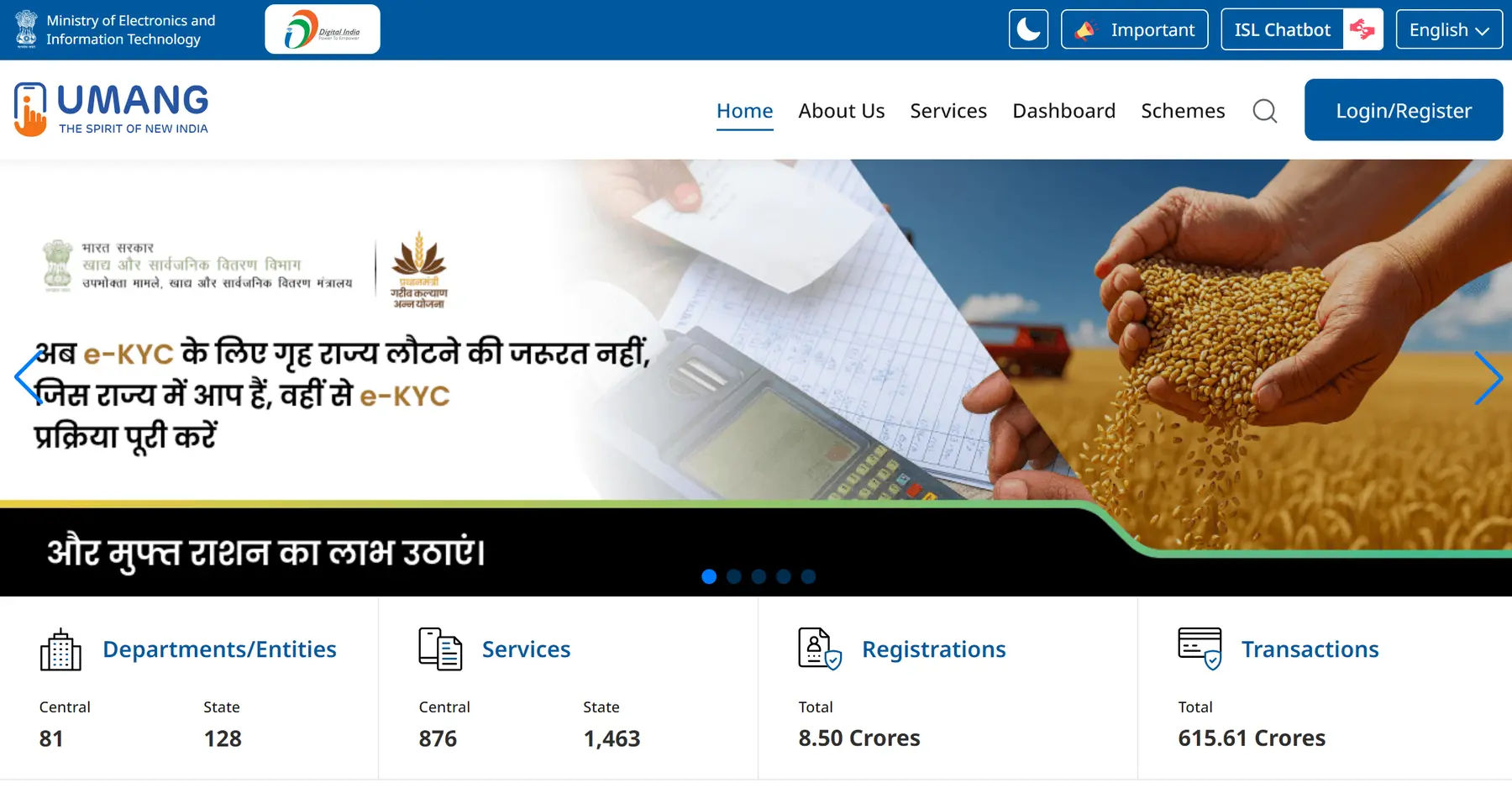
STEP 2: Click on "login/register" on the main page.
STEP 3: Enter your mobile number and MPIN, then click "login."
STEP 4: In the search bar, type "NSAP" and select the first option.
STEP 5: Click "Apply Now" on the NSAP page.
STEP 6: Fill out the application form by choosing the correct scheme and provide your address.
STEP 7: Enter your personal details, bank information, and Aadhaar number carefully.
STEP 8: Review all details and submit the form.
Offline Application Steps
STEP 1: Download and print the NSAP form.
STEP 2: Complete the form with your personal, demographic, and bank details.
STEP 3: Submit the form to your local government or panchayat office.
STEP 4: Officials will verify your details and if approved, you will receive financial aid.
Verification and Selecting Beneficiaries
Local gram panchayats or municipal bodies select new beneficiaries from BPL families using updated poverty lists. You need to show proof like a birth certificate, Aadhaar Card, or disability certificate for age and disability claims.
Current beneficiaries have their eligibility checked once a year. Special teams with government and NGO members verify whether the support should continue. If you don't agree with any decision, you can file an appeal within 15 days.
NSAP Processing Timeline
| Process | Time Frame |
|---|---|
| Verification after applying | 15 days |
| Review by Gram Sabha / Ward | 20 days |
| Review by Gram Panchayat / Municipality | 15 days |
| Pension approval | 10 days |
| First appeal disposal (if pension denied) | 15 days |
| Second appeal disposal | 15 days |
Guidelines PDF
Download NSAP Scheme Guidelines PDF
Contact and Helpline
If you have questions about NSAP, call the free helpline number 1800-111-555 for support.
FAQ's
Who can get benefits under the NSAP Scheme?
Needy Indian citizens who are senior citizens, widows, or disabled people and belong to the below poverty line category qualify for NSAP benefits.
What does NSAP stand for?
NSAP means National Social Assistance Programme.
How does the government give money to NSAP beneficiaries?
The government transfers funds directly to beneficiaries' bank accounts through the Direct Benefit Transfer (DBT) system for quick and safe payment.
Can people living in cities apply for NSAP?
Yes, both rural and urban residents can apply if they meet the eligibility conditions.
Is Aadhaar Card needed to apply for NSAP?
Yes, Aadhaar Card is required for identity and to link your bank account for receiving payments.
How often is the beneficiary's eligibility checked?
Eligibility is checked every year by government teams to make sure only qualified people receive benefits.
What should I do if my NSAP application is rejected?
You can file an appeal within 15 days after receiving the rejection notice to challenge the decision.