
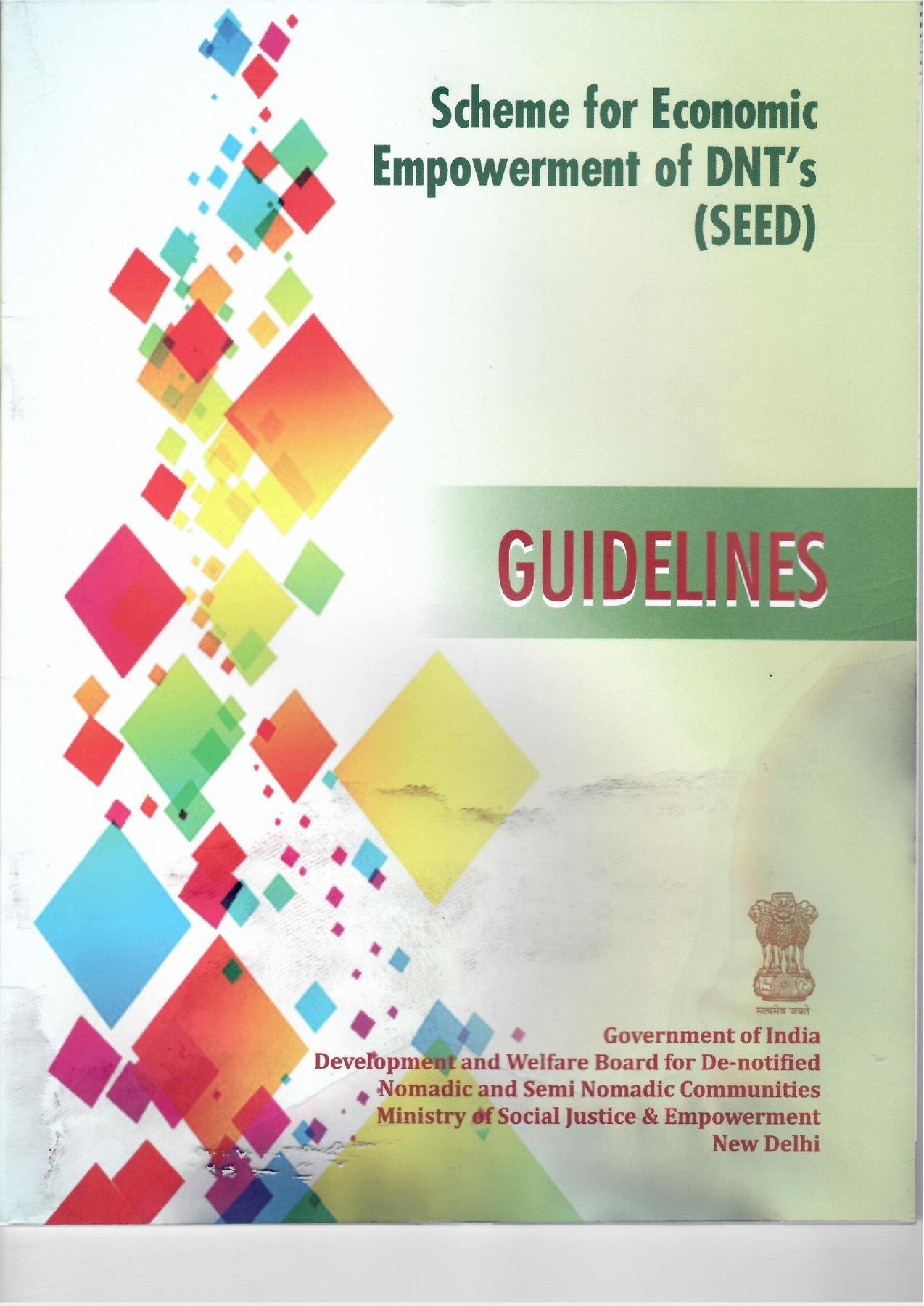
Scheme for Economic Empowerment of De-notified, Nomadic and Semi-Nomadic Tribes (SEED) is a central government scheme that helps DNT, NT and SNT communities through education, health, housing and livelihood support. Ministry of Social Justice and Empowerment launched the scheme on 16 February 2022, and the Development and Welfare Board for De-notified, Nomadic and Semi-Nomadic Communities (DWBDNC) handles its rollout.
In 2025-26, the scheme covered more than 1.10 lakh beneficiaries across the country, with about ₹53.06 crore released for education, livelihood and healthcare support. The total outlay for the scheme is ₹200 crore for the period from 2021-22 to 2025-26.
SEED Scheme 2026
SEED Scheme has been built around four components that cover the livelihood of DNT, NT and SNT communities. The four components of the scheme are given below.
- Educational empowerment - free coaching to qualified students from these communities for civil services and entry to professional courses like medicine, engineering and MBA.
- Health insurance through PMJAY of the National Health Authority.
- Livelihood support to help income generation at the community level.
- Housing support through PMAY or IAY.
The DWBDNC is the main department running the scheme, and the National Scheduled Castes Finance and Development Corporation (NSFDC) acts as the implementing agency for the livelihood component. From 2024-25, the livelihood component is being run in Andhra Pradesh, Maharashtra, Tamil Nadu and Uttar Pradesh.
Objectives of SEED Scheme
The main aims of the SEED Scheme are given below.
- To provide good quality coaching for DNT candidates so that they can appear in competitive examinations.
- To provide health insurance to DNT communities.
- To help livelihood work at the community level and build small clusters of DNT, NT and SNT institutions.
- To give financial support for construction of houses to members of DNT communities.
SEED Scheme Highlights
| Detail | Information |
|---|---|
| Scheme Name | Scheme for Economic Empowerment of DNTs (SEED) |
| Launched By | Ministry of Social Justice and Empowerment |
| Launched On | 16 February 2022 |
| Beneficiaries | DNT, NT and SNT communities |
| Total Outlay | ₹200 crore (2021-22 to 2025-26) |
| Implementing Agency | DWBDNC |
| Official Website | socialjustice.gov.in |
Eligibility for SEED Scheme
To get the benefit of the scheme, the applicant must belong to a De-notified, Nomadic or Semi-Nomadic Tribe community and must have a valid DNT, NT or SNT certificate. The total family income from all sources should be ₹8 lakh or less per year. The candidate should not be getting a similar benefit from any other central or state government scheme.
How to Get the SEED Scheme Guidelines
The official guidelines of the SEED scheme are available on the Ministry of Social Justice and Empowerment website. Eligible people can download the guidelines PDF from the official page at socialjustice.gov.in/schemes/109. The livelihood component details are also available on the NSFDC website at nsfdc.nic.in/seed-scheme.
For the educational component, the application portal opens on the official ministry website for one month, two times a year, during July and January. The whole process is done online, and no offline application is accepted.
FAQ's
Is the SEED scheme still running?
Yes, the SEED scheme is still running. In 2025-26, it covered more than 1.10 lakh beneficiaries across the country.
What is the family income limit under the SEED scheme?
The total family income from all sources should be ₹8 lakh or less per year for the educational component.
Where can I download the SEED scheme guidelines?
The official guidelines are available on the Ministry of Social Justice and Empowerment website at socialjustice.gov.in/schemes/109.