

PM Dhan Dhaanya Krishi Yojana has been launched, and work under this scheme started from 2025-26 for selected districts across India. This is a new agriculture scheme of Government of India focused on 100 districts where farm productivity, cropping intensity, and farm credit flow are low.
This scheme was announced in Union Budget 2025-26, approved by Union Cabinet on 16 July 2025, and launched on 11 October 2025. Under this scheme, the government is bringing together 36 existing schemes from 11 ministries and departments so that selected districts get one proper agriculture development plan instead of scattered support.
One of the biggest points of this scheme is its district-based approach. Instead of running support in a general way, PMDDKY focuses on local problems such as weak irrigation, less storage, low crop diversification, poor access to bank credit, and weak value addition in villages. This makes the scheme more practical for farmers on the ground.
Government has said this scheme is expected to directly benefit around 1.7 crore farmers over six years. Small and marginal farmers are likely to be the main focus, but benefits are also meant for FPO members, women groups, dairy farmers, fishery workers, poultry units, and local agri-entrepreneurs connected with farming and allied activities.
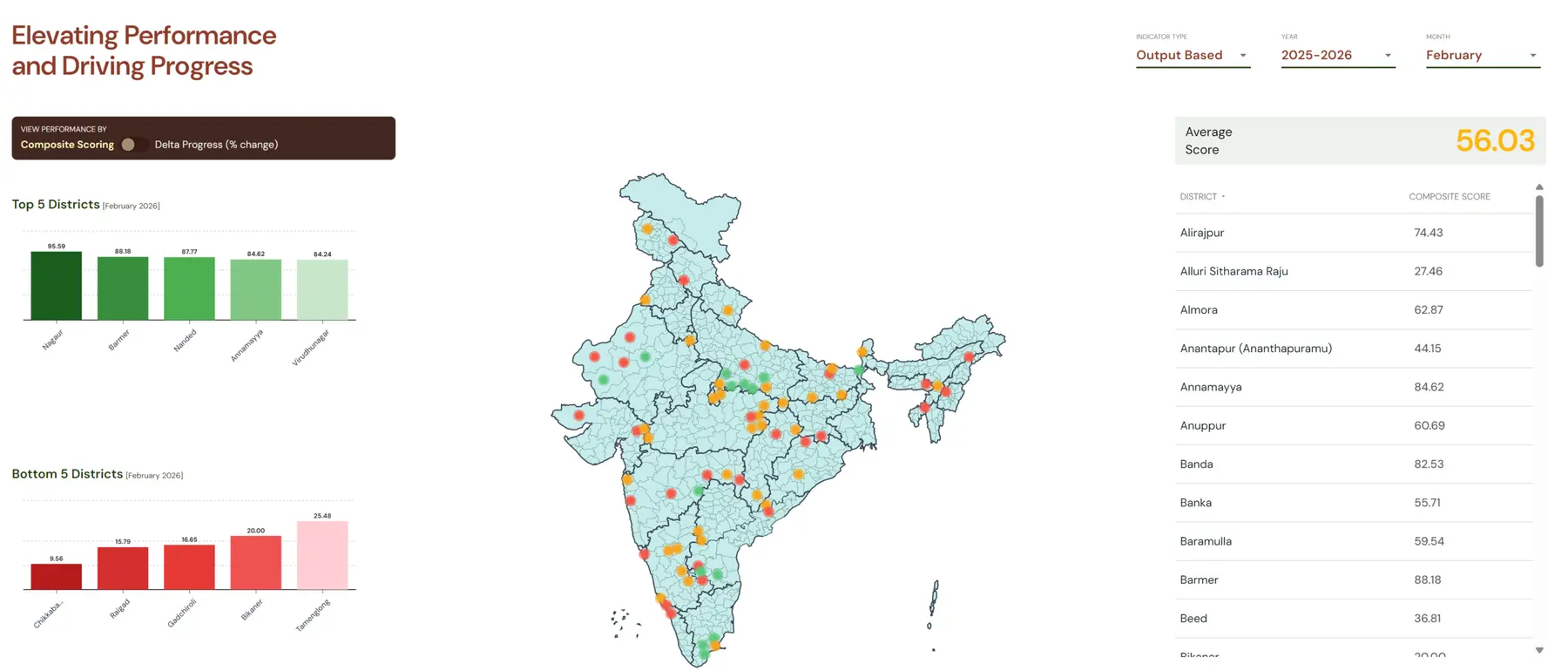
PM Dhan Dhaanya Krishi Yojana Latest Update and Highlights
| Point | Details |
|---|---|
| Scheme Name | PM Dhan Dhaanya Krishi Yojana |
| Scheme Type | Central Sector scheme |
| Announced In | Union Budget 2025-26 |
| Cabinet Approval Date | 16 July 2025 |
| Launch Date | 11 October 2025 |
| Duration | 6 years from 2025-26 to 2030-31 |
| Annual Budget | Rs. 24,000 crore per year |
| Total Indicative Outlay | About Rs. 1.44 lakh crore over 6 years |
| Coverage | 100 districts across India with at least one district from each State and UT |
| Main Focus | Agriculture and allied sectors in low-performing districts |
| Expected Direct Beneficiaries | About 1.7 crore farmers |
| Implementation Model | Convergence of 36 schemes across 11 ministries and departments |
| Monitoring System | 117 KPIs with dashboard-based monthly review - Check latest scheme progress |
| Nodal Ministry | Ministry of Agriculture and Farmers Welfare |
Latest Update: PM Dhan Dhaanya Krishi Yojana was launched on 11 October 2025, and district-level rollout has already started in selected areas. More district planning, monitoring, and field implementation work is continuing during 2025-26 and 2026.
What is PM Dhan Dhaanya Krishi Yojana?
PM Dhan Dhaanya Krishi Yojana is India’s first national district-focused agriculture scheme started only for agriculture and allied sectors. It takes inspiration from Aspirational Districts Programme and applies a similar result-based model to farming districts that are lagging behind.
Main idea of this scheme is simple. Government is not creating one more stand-alone subsidy only for cash transfer. Instead, it is reorganizing and combining support already available under many schemes into one district-specific agriculture plan. This helps selected districts get focused support for irrigation, storage, farming methods, diversification, credit, and allied income activities.
Scheme aims to raise agricultural productivity, increase farmers’ income, improve irrigation facilities, support crop diversification, expand post-harvest storage at panchayat and block level, and improve access to both short-term and long-term agriculture credit.
Why PM Dhan Dhaanya Krishi Yojana Was Needed
Many districts in India still face low yields, poor water use, weak storage, less access to formal credit, and limited crop choices. In many places, different schemes were running, but results were not strong because planning was scattered and departments worked separately.
This scheme tries to fix that gap. Instead of giving support in pieces, district administration prepares one combined plan based on local crop pattern, soil condition, water status, farmer needs, and local market opportunities. This is why PMDDKY is being seen as a focused reform model for agriculture.
It is also important because many backward farm districts face climate pressure, rain dependence, post-harvest losses, and low rural jobs. By linking agriculture with dairy, fisheries, poultry, processing, storage, and rural enterprise, scheme tries to make village income more stable.
Main Objectives of PM Dhan Dhaanya Krishi Yojana
Scheme has multiple clear goals. First, it wants to improve productivity in low-performing districts. Second, it wants to promote crop diversification so farmers are not stuck with one low-return pattern. Third, it wants to improve irrigation and water-use efficiency, which is a major issue in many districts.
Another major goal is better storage and value addition. Farmers often lose income because produce is sold early at low rates or gets damaged after harvest. With village and block-level storage, processing, and better market links, income support becomes more practical.
Scheme also wants to improve access to formal credit. Many small farmers still depend on informal borrowing. Through stronger banking linkages, KCC expansion, and district-level credit planning, this scheme aims to improve availability of finance for crop activities and allied work.
Sustainable farming is also part of the scheme. Government has included support for natural farming, organic methods, better soil health, balanced fertilizer use, and local innovations where useful.
Key Features and Guiding Principles
Biggest feature of PMDDKY is convergence. It brings together 36 schemes from 11 ministries and departments. This means support related to irrigation, credit, storage, extension, allied sectors, infrastructure, and farmer services can be planned together at district level.
Second key feature is saturation-based planning. Districts are expected to identify major gaps and fill them in a planned way. For example, if a district has weak irrigation and no storage, those gaps get priority instead of generic spending.
Third key feature is decentralized planning. Every selected district is expected to prepare a local agriculture and allied activities plan. This makes the scheme more grounded because one district in Rajasthan and one district in Assam will not need the same kind of support.
Fourth key feature is real-time monitoring. Progress is tracked using 117 Key Performance Indicators. Reviews are done through dashboard-based reporting at district, state, and national level.
Who Will Benefit Under PM Dhan Dhaanya Krishi Yojana
Main beneficiaries are farmers living in selected 100 districts. Small and marginal farmers are expected to be the biggest focus group because these districts mostly have weaker agriculture performance and lower access to support systems.
Benefits are also relevant for tenant farmers and sharecroppers where local systems recognize them, though direct access may depend on district-level implementation rules. Apart from crop farmers, dairy workers, fishery farmers, poultry units, beekeepers, self-help groups, FPO members, and village-level agri-entrepreneurs are also part of the broader target group.
Women farmers and youth are expected to get a stronger role in district planning and allied sector work. This matters because many rural households now depend on mixed income from crops, animals, milk, poultry, and local processing work.
Eligibility Criteria
There is no single all-India public application rule released in the style of direct cash transfer schemes, but based on scheme design and district-level implementation, these points are important for beneficiaries.
Applicant should belong to one of the selected districts under PM Dhan Dhaanya Krishi Yojana. Person should be connected with agriculture or allied activities such as farming, dairy, fisheries, poultry, farmer producer organization work, or village agri-enterprise. Aadhaar, bank account, land or activity proof, and local verification may be required depending on the kind of benefit being given in that district.
Since this scheme works through district plans and convergence of existing schemes, exact eligibility may change from activity to activity. For example, irrigation support, credit support, FPO-linked support, storage support, or allied sector support may each follow their linked scheme rules.
How Districts Are Selected Under PMDDKY
Government selected 100 districts using scientific criteria. Main parameters include low agricultural productivity, low or moderate cropping intensity, and below-average agricultural credit disbursement. This means districts were chosen because they were not getting enough results from agriculture compared to their need and potential.
At least one district from every State and UT is included. This gives all-India balance and also makes sure the scheme is not limited to one region only. Districts include rain-fed belts, tribal areas, dry regions, backward rural pockets, and places where agriculture needs focused support.
This model also borrows from the experience of NITI Aayog’s Aspirational Districts Programme. Idea is to bring measurable change by focusing resources, setting district targets, and reviewing progress regularly.
Implementation Structure
Ministry of Agriculture and Farmers Welfare is nodal ministry for PM Dhan Dhaanya Krishi Yojana. But implementation is wider because 11 ministries and departments are part of the convergence model. This includes agriculture-linked departments such as rural development, animal husbandry, fisheries, food processing, irrigation-related systems, and finance-linked support.
At national level, monitoring and direction are supported through structured review systems and dashboard tracking. NITI Aayog, technical institutions, and agriculture universities are expected to support planning, monitoring, and performance review.
At state level, monitoring and coordination committees help align central support with state priorities. Since many interventions need joint action between departments, state-level coordination becomes very important.
At district level, Dhan Dhaanya Samiti is the main working body. This district committee prepares and carries forward local agriculture and allied sector plans. It includes district administration, line department officials, experts, bankers, and progressive farmers. In many areas, participation of FPOs, panchayats, women, and youth is also expected.
Role of District Dhan Dhaanya Samiti
District Dhan Dhaanya Samiti is one of the most important parts of this scheme. This body is responsible for making district-specific planning real on the ground. Instead of using a one-size-fits-all model, the committee studies local needs and prepares a practical action plan.
This plan is often referred to as a district agriculture and allied activities plan. It may include crop diversification targets, irrigation work, storage creation, natural farming clusters, dairy and fishery support, credit expansion, and value addition projects based on local needs.
Committee also helps in coordination between departments and linked schemes. This is important because the success of PMDDKY depends less on announcements and more on how well local planning is done and followed.
36 Schemes Convergence Under PMDDKY
One common confusion is whether PMDDKY gives one new separate subsidy to every farmer. In practice, this scheme works more like a large integration platform. It pulls together support from 36 existing schemes under 11 ministries and departments so districts can use them in a planned way.
This convergence may include support related to seeds, soil health, digital advisory, irrigation, watershed work, micro-irrigation, godowns, cold storage, processing, Kisan Credit Card, insurance, dairy, fisheries, poultry, and rural value chain support. Because of this, PMDDKY is wider than a normal agriculture scheme.
State schemes and private participation can also be linked where useful. This opens the door for better processing units, market linkages, agri services, storage projects, and district-level infrastructure support.
Major Interventions Expected Under PM Dhan Dhaanya Krishi Yojana
Government has indicated that selected districts will receive focused support across key areas of farming and allied work. These interventions are expected to differ from district to district, but broad areas remain common.
- Productivity support through better seeds, improved farming methods, climate-suitable crop planning, soil health management, and field-level extension.
- Crop diversification support through pulses, oilseeds, millets, horticulture, and other higher-value crops suited to local conditions.
- Irrigation and water support through micro-irrigation, farm water management, local water structure improvement, and better use of available water.
- Storage and post-harvest support through village godowns, cold storage, primary processing units, grading, and local value addition.
- Credit and risk support through stronger KCC reach, easier formal lending, allied sector finance, and better insurance linkages.
- Allied income support through dairy, fisheries, poultry, beekeeping, self-help groups, and FPO-linked activity expansion.
Benefits of PM Dhan Dhaanya Krishi Yojana
Farmers in selected districts are expected to get benefits in a more practical form than a simple one-time scheme. If local implementation is done well, support can improve both farm production and non-farm rural income connected with agriculture.
Possible benefits include better irrigation access, better storage, reduction in post-harvest loss, stronger crop planning, easier bank credit, more village-level processing, and higher chances of crop diversification. This is useful for districts where farmers depend on low-return traditional patterns and face frequent income pressure.
Another major benefit is accountability. Since district progress is linked with regular indicators and digital monitoring, officers and departments are expected to work in a more result-based way. This may help selected districts move faster than earlier fragmented agriculture planning.
How to Apply for PM Dhan Dhaanya Krishi Yojana
At present, PM Dhan Dhaanya Krishi Yojana does not work like a single direct online registration scheme for every farmer across India. Many benefits under this programme are expected to flow through district agriculture plans, linked schemes, banks, FPOs, line departments, and local verification systems.
STEP 1: First, check whether your district is included in PM Dhan Dhaanya Krishi Yojana. This can be confirmed through the district agriculture office, state agriculture department notices, or just look at the list below.
STEP 2: Visit district agriculture office, block agriculture office, Krishi Vigyan Kendra, FPO office, or related department office and ask which component is active in your area. Since PMDDKY is a convergence scheme, support may open under irrigation, storage, natural farming, KCC, allied activity, or another linked category.
STEP 3: Keep Aadhaar card, bank passbook, mobile number, address proof, land record if available, and activity-related documents ready. For dairy, fisheries, poultry, FPO, or SHG-linked support, extra documents may also be asked.
STEP 4: Fill the required form or join the district-level activity process as guided by the local office. In some cases, beneficiaries may not need a separate PMDDKY form and may instead be covered through a linked scheme being implemented under district plan.
STEP 5: After document checking and local verification, eligible farmers or groups may be included under the approved district action plan or benefit component. Final process may change from district to district based on the type of support being rolled out.
List of Districts Covered Under PM Dhan Dhaanya Krishi Yojana
Government has released the list of 100 districts selected under this scheme. These districts were picked mainly on the basis of low productivity, low cropping intensity, and low credit flow. State-wise district list is given below.
| State | District |
|---|---|
| Andhra Pradesh | Sri Sathya Sai |
| Andhra Pradesh | Anantapur (Ananthapuramu) |
| Andhra Pradesh | Alluri Sitharama Raju |
| Andhra Pradesh | Annamayya |
| Arunachal Pradesh | Anjaw |
| Assam | Sribhumi (Karimganj) |
| Assam | Charaideo |
| Assam | Dima Hasao |
| Bihar | Madhubani |
| Bihar | Darbhanga |
| Bihar | Banka |
| Bihar | Gaya |
| Bihar | Siwan |
| Bihar | Kishanganj |
| Bihar | Nawada |
| Chhattisgarh | Dantewada |
| Chhattisgarh | Jashpur |
| Chhattisgarh | Korba |
| Goa | South Goa |
| Gujarat | Kachchh |
| Gujarat | Dohad/Dahod |
| Gujarat | Chhotaudepur |
| Gujarat | Panch Mahals |
| Haryana | Nuh |
| Himachal Pradesh | Bilaspur |
| Jammu and Kashmir | Kishtwar |
| Jammu and Kashmir | Baramulla |
| Jharkhand | Simdega |
| Jharkhand | West Singhbhum |
| Karnataka | Tumakuru |
| Karnataka | Chitradurga |
| Karnataka | Koppal |
| Karnataka | Gadag |
| Karnataka | Haveri |
| Karnataka | Chikkaballapura |
| Kerala | Kozhikode |
| Kerala | Kasaragod |
| Kerala | Kannur |
| Madhya Pradesh | Anuppur |
| Madhya Pradesh | Dindori |
| Madhya Pradesh | Alirajpur |
| Madhya Pradesh | Shahdol |
| Madhya Pradesh | Umaria |
| Madhya Pradesh | Sidhi |
| Madhya Pradesh | Niwari |
| Madhya Pradesh | Tikamgarh |
| Maharashtra | Palghar |
| Maharashtra | Yavatmal |
| Maharashtra | Gadchiroli |
| Maharashtra | Dhule |
| Maharashtra | Raigad |
| Maharashtra | Chandrapur |
| Maharashtra | Chhatrapati Sambhajinagar (Aurangabad) |
| Maharashtra | Nanded |
| Maharashtra | Beed |
| Manipur | Tamenglong |
| Meghalaya | West Jaintia Hills |
| Mizoram | Mamit |
| Nagaland | Mon |
| Odisha | Kandhamal |
| Odisha | Malkangiri |
| Odisha | Sundargarh |
| Odisha | Nuapada |
| Punjab | Fazilka |
| Rajasthan | Barmer |
| Rajasthan | Jaisalmer |
| Rajasthan | Pali |
| Rajasthan | Nagaur |
| Rajasthan | Jodhpur |
| Rajasthan | Bikaner |
| Rajasthan | Churu |
| Rajasthan | Jalore |
| Sikkim | Geyzing (formerly West District) |
| Tamil Nadu | Ramanathapuram |
| Tamil Nadu | Thoothukudi (Tuticorin) |
| Tamil Nadu | Sivaganga |
| Tamil Nadu | Virudhunagar |
| Telangana | Narayanpet |
| Telangana | Jogulamba Gadwal |
| Telangana | Jangoan |
| Telangana | Nagarkurnool |
| Tripura | North Tripura |
| Uttar Pradesh | Mahoba |
| Uttar Pradesh | Sonbhadra |
| Uttar Pradesh | Hamirpur |
| Uttar Pradesh | Banda |
| Uttar Pradesh | Jalaun |
| Uttar Pradesh | Jhansi |
| Uttar Pradesh | Unnao |
| Uttar Pradesh | Prayagraj |
| Uttar Pradesh | Chitrakoot |
| Uttar Pradesh | Pratapgarh |
| Uttar Pradesh | Shravasti |
| Uttar Pradesh | Lalitpur |
| Uttarakhand | Almora |
| Uttarakhand | Chamoli |
| West Bengal | Purulia |
| West Bengal | Darjeeling |
| West Bengal | Alipurduar |
| West Bengal | Jhargram |
Monitoring and 117 KPIs
Monitoring system is one of the strongest parts of this scheme. Government has set up 117 Key Performance Indicators to track district progress. These indicators cover areas such as productivity, irrigation, storage, credit flow, diversification, and allied sector improvement.
Progress is reviewed regularly through a central dashboard and monthly reporting. This allows comparison between districts and helps officers identify where implementation is slow. Because of this data-based model, PMDDKY is more performance-driven than many older agriculture support models.
District, state, and national level reviews are part of the process. Field reviews by nodal officers and linked departments also help in checking whether district plans are being carried out properly.
Early Progress Since Launch
Since launch in October 2025, scheme has moved into district-level planning and rollout stage. Target districts have already been identified, and implementation structures such as district committees and convergence meetings have started in many places.
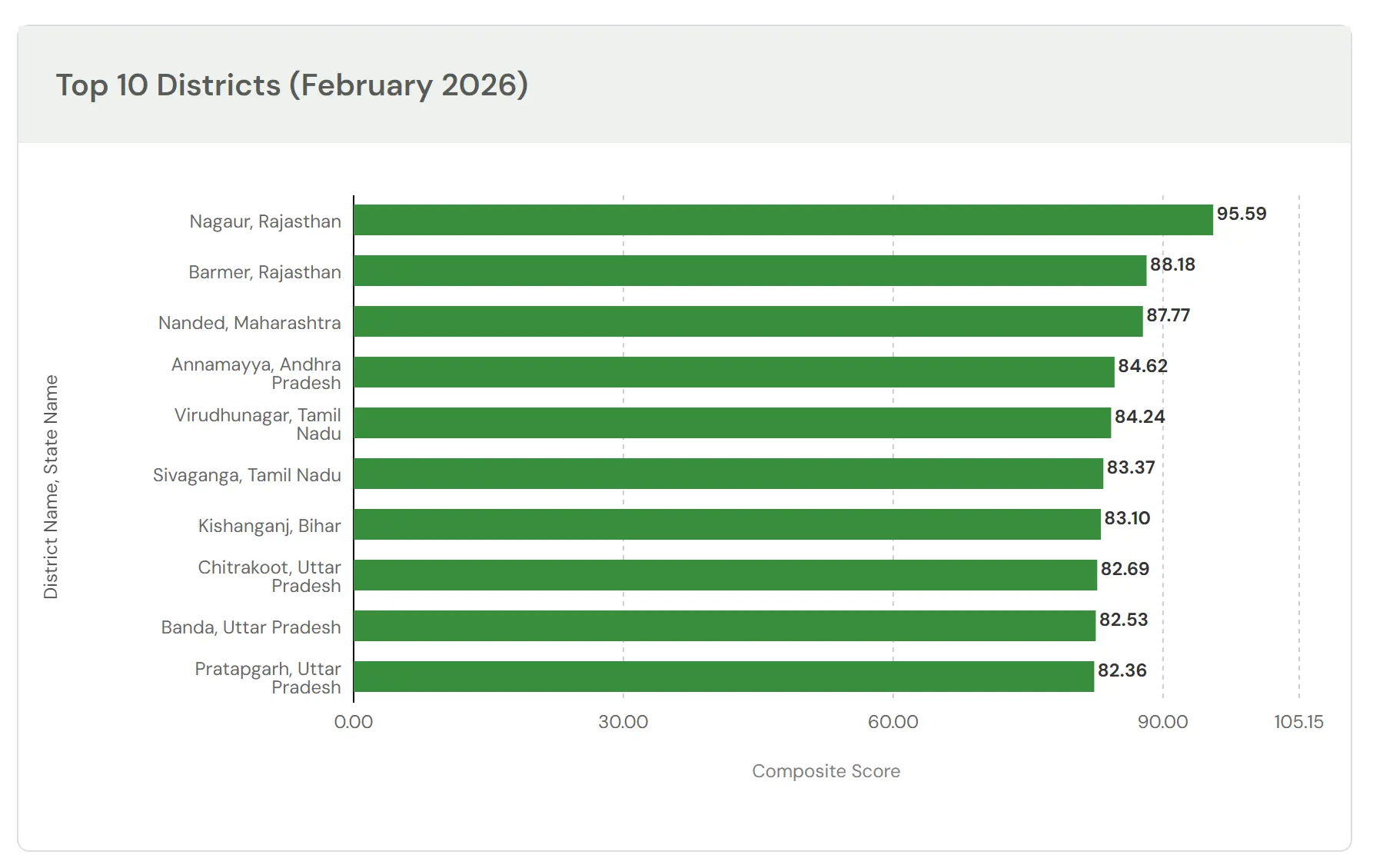
Early work mainly includes preparation of district agriculture plans, coordination between departments, and mapping of local gaps in irrigation, storage, diversification, and credit. Some states have already held launch or review events to push field implementation faster.
At this stage, large outcome data such as district-wise increase in yields or income is still limited in the public domain. This is normal because scheme runs for six years, and measurable farm-level results usually take time to show.
Challenges and Risks
Although scheme design is strong, implementation will decide final results. One major challenge is coordination across 11 ministries and many state departments. If departments do not work together, district plans may stay on paper.
Another challenge is local capacity. Some districts have stronger administration, better data, and more active field systems, while others may struggle with planning and execution. Quality of district-level leadership will matter a lot.
Inclusion is also important. Benefits should not remain limited to only large landholders or better-connected groups. Women farmers, small farmers, tenant cultivators, and village-level producer groups need proper access if scheme is to make a real difference.
Data quality is another issue. Since 117 KPIs are used, baseline data and regular updating must be strong. Otherwise dashboard numbers may look good, but ground results may remain weak.
Why PM Dhan Dhaanya Krishi Yojana Matters for India
This scheme matters because it tries to reduce regional imbalance in agriculture. India has many districts with strong farming growth, but many others still lag behind in productivity, irrigation, storage, and access to credit. PMDDKY directly targets those weak areas.
It also supports larger national goals such as stronger food security, better pulses and oilseeds output, more village-level processing, and better rural livelihoods. If district plans work well, scheme can help farmers move from low-return farming to more stable and mixed income systems.
Success of PMDDKY will depend on what happens in the field. Budget and announcements are important, but district planning, honest monitoring, and farmer participation will decide whether this becomes a major agriculture reform or only another policy file.
PMDDKY Guidelines
Detailed guidelines related to PM Dhan Dhaanya Krishi Yojana are available in PDF format and can be downloaded using below link.
PM Dhan Dhaanya Krishi Yojana Guidelines PDF
FAQs
What is PM Dhan Dhaanya Krishi Yojana?
PM Dhan Dhaanya Krishi Yojana is a Central Sector agriculture scheme of Government of India for 100 selected low-performing districts. It combines 36 schemes from 11 ministries into one district-focused development model.
When was PM Dhan Dhaanya Krishi Yojana approved and launched?
Scheme was announced in Union Budget 2025-26, approved by Union Cabinet on 16 July 2025, and launched on 11 October 2025.
How many farmers are expected to benefit from PMDDKY?
Government has said around 1.7 crore farmers are expected to benefit directly under this scheme over its six-year period.
What is annual budget of PM Dhan Dhaanya Krishi Yojana?
Annual budget is Rs. 24,000 crore. Over six years, total indicative outlay comes to about Rs. 1.44 lakh crore.
How many districts are covered under this scheme?
PMDDKY covers 100 districts across India, with at least one district from every State and Union Territory.
Who can get benefit under PM Dhan Dhaanya Krishi Yojana?
Farmers and allied sector workers living in selected districts may get benefit. This includes small and marginal farmers, FPO members, dairy farmers, fishery workers, poultry units, SHGs, and agri-entrepreneurs, depending on local implementation.
Is there an online application portal for PMDDKY?
A separate all-India public portal for one common application has not been clearly notified in the same way as direct cash schemes. Many benefits are expected to move through district agriculture plans, local offices, banks, and linked schemes.
How is progress monitored under PMDDKY?
Progress is monitored through 117 Key Performance Indicators using dashboard-based monthly review at district, state, and national level.
What are main benefits of PM Dhan Dhaanya Krishi Yojana?
Main benefits include better irrigation, higher productivity, crop diversification, improved storage, stronger access to farm credit, support for allied activities, and better local agriculture planning.