
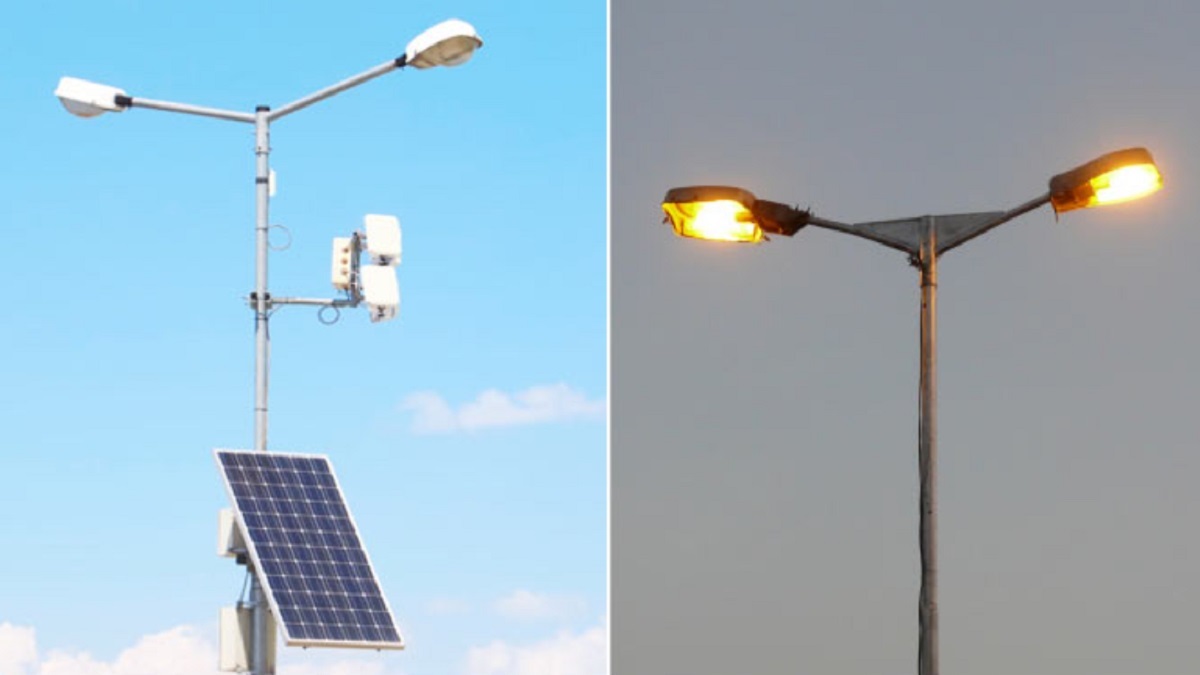
Bihar government is running Mukhyamantri Gramin Solar Street Light Yojana across rural areas of the state, and more than 10 lakh solar street lights have already gone up since the scheme started in 2022. Panchayati Raj Department, along with Bihar Renewable Energy Development Agency (BREDA), is handling the installation work in 8,057 panchayats covering over 1.09 lakh wards.
By 31 March 2026, a total of 10,29,950 solar lights were installed against a target of 11,73,740 lights, leaving around 1,43,790 lights still pending in different panchayats. Panchayati Raj department called a review meeting on 13 April 2026 after finding that many districts were behind schedule even after the deadline had passed.
Bihar Rural Solar Street Light Scheme 2026
Scheme was launched under Mukhyamantri 7 Nishchay Yojana-2 (Saat Nischay Part 2) with the aim of lighting up village roads, lanes and other important places from dusk to dawn using solar power. It is one of the schemes covered under Saat Nischay Yojana Part 2, along with schemes like Har Ghar Bijli Yojana and Har Ghar Nal Ka Jal.
How to Check Solar Street Light Status Online
Panchayati Raj department has put up a public dashboard where villagers can check how many lights their panchayat was allotted and how many are actually installed. Steps to check are simple.
STEP 1 - Go to the department's Nischay Soft portal at prdnischaysoft.bihar.gov.in and open the Solar Street Light Report page.
STEP 2 - Select district, block and panchayat name one by one from the drop-down boxes given on the page.
STEP 3 - Report that opens will show number of lights sanctioned, number already installed and number still pending for that panchayat.
Installation Progress So Far
Work under this scheme has moved in phases, with the fourth and final phase originally set for completion by March 2026. Progress has been uneven across districts. Down To Earth had earlier reported that people in over 80 percent of villages were still waiting for their solar lights, and the deadline had to be pushed once already from 2024 to August 2025 before being extended further.
Scheme is being funded with support from the 15th Finance Commission grants meant for rural infrastructure. Contracts to supply and install lights, along with five-year maintenance, are being awarded to agencies in batches. ITI Limited, for example, picked up new contracts worth over ₹37 crore for installations in Katihar district.
| Detail | Information |
|---|---|
| Scheme Name | Mukhyamantri Gramin Solar Street Light Yojana |
| Launched By | Bihar Government, Panchayati Raj Department |
| Launched Under | Saat Nischay Part 2 (Mukhyamantri 7 Nishchay Yojana-2) |
| Implementing Agency | Bihar Renewable Energy Development Agency (BREDA) |
| Coverage | 8,057 panchayats, 1,09,332 wards |
| Target | 11,73,740 solar street lights |
| Installed So Far | 10,29,950 lights (as on 31 March 2026) |
| Funding Source | 15th Finance Commission grants |
| Status Check Portal | prdnischaysoft.bihar.gov.in |
| Official Website | breda.bih.nic.in |
Implementation and Monitoring
BREDA prepares the panel of approved suppliers, fixes technical standards and pricing for the solar lights, and checks quality of parts used at the time of installation. Every installed light is geo-tagged using GPS so that its location and working condition can be tracked from a central system. District-level technical units under BREDA support panchayats with day-to-day monitoring and repair complaints.
Salient Features of Scheme
Apart from installation numbers, scheme carries a few features that are worth knowing before checking status for a local panchayat.
- On average, around 10 solar street lights are being installed in every ward under this scheme, mainly on village roads, chowks and other places with heavy footfall after dark.
- Village head (Mukhiya) is responsible for identifying exact spots for installation through a local survey before work starts in that panchayat.
- Manufacturing units for solar light parts are also being promoted within Bihar, which is expected to create some local jobs alongside the lighting work.
- Related schemes under Saat Nischay Part 2 include Bihar Student Credit Card Scheme, Har Ghar Bijli Yojana, Ghar Tak Pakki Gali-Naliyan, Har Ghar Nal Ka Jal, and Shauchalay Nirman Ghar Ka Samman.
People looking for solar subsidy options for their own homes, rather than village street lighting, can check details on Solar Rooftop Subsidy Scheme separately, since that is a different central scheme for households.
Official Website and Helpline
Bihar Renewable Energy Development Agency (BREDA) official website: https://www.breda.bih.nic.in/. For panchayat-wise installation reports, Panchayati Raj department's portal prdnischaysoft.bihar.gov.in can be used. Complaints about non-working lights or pending installation can be raised with the local panchayat office or block Panchayati Raj officer.
FAQ's
What is Bihar Rural Solar Street Light Scheme?
It is a state scheme under which Bihar government is installing solar powered street lights on village roads and public places, run by Panchayati Raj department with technical support from BREDA.
How many solar lights have been installed under this scheme so far?
As on 31 March 2026, 10,29,950 solar street lights were installed out of a total target of 11,73,740 lights across 8,057 panchayats.
Can villagers apply individually for a solar light under this scheme?
No. Locations for solar lights are selected through a survey done by the panchayat, so there is no individual online application form for residents to fill.
How can a panchayat check pending installation status?
Status can be checked on the Panchayati Raj department portal at prdnischaysoft.bihar.gov.in by selecting district, block and panchayat name.
What is the last date to complete this scheme?
Final phase was originally targeted for completion by March 2026, but with lights still pending in many panchayats, department extended work and reviewed progress in April 2026, so a fresh completion date is expected once districts catch up.
is it only for 1 panchayat in 1District. or in every ward of every panchayat.
for every ward of every Panchayat
for every ward of every Panchayat