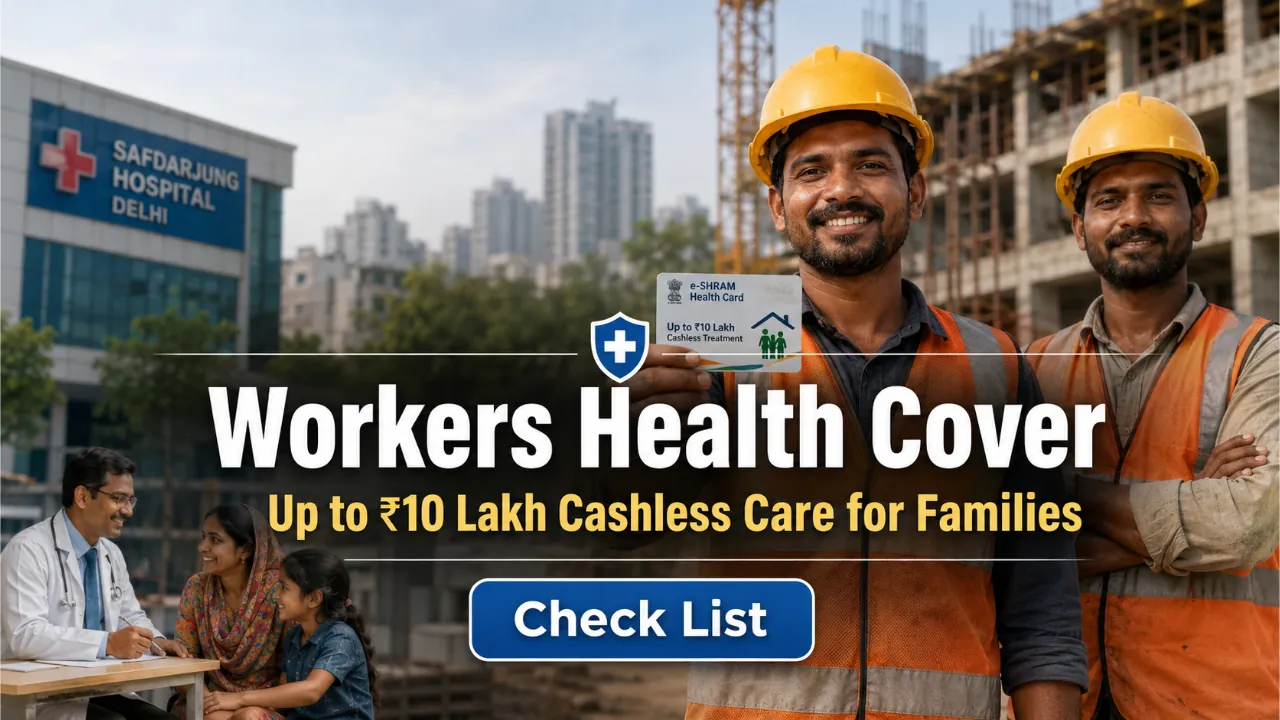
Delhi government has approved a new health scheme for construction workers called Delhi Building and Construction Workers Health Scheme. The Cabinet, chaired by Chief Minister Rekha Gupta, cleared the scheme on 23rd June 2026, and it will give cashless treatment of up to ₹2 lakh for each worker and up to ₹10 lakh for a full family.
Around 2.70 lakh registered construction workers and their families in Delhi will be covered under this scheme. Officials say nearly 10 lakh people across the capital will get benefit in total, and the government plans to spend about ₹200 crore every year on it.

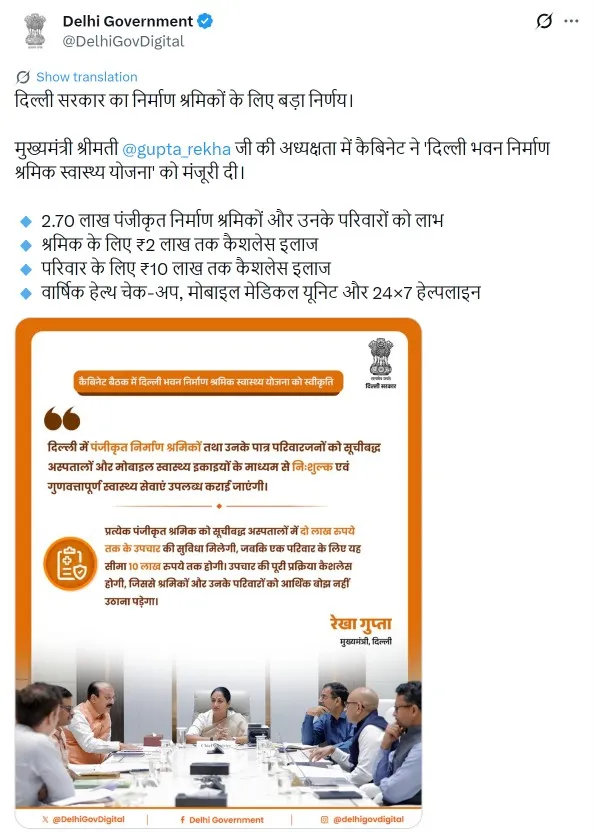
Delhi Building and Construction Workers Health Scheme 2026
This scheme is made for registered construction workers and their eligible family members, which include spouses, children and parents. All of them will get free and quality health services through empanelled hospitals and mobile health units.
Each registered worker can get treatment of up to ₹2 lakh at empanelled hospitals. For a full family, the cover goes up to ₹10 lakh. The whole treatment process will be cashless, so workers will not have to pay from their own pocket at the hospital.
Construction workers face many health risks at work every day. They are regularly exposed to stone-cutting dust, chemicals, loud noise, heavy machinery and hard physical work. Because of this, they often suffer from silicosis (a lung disease), breathing problems, skin issues and other serious health problems. A proper health cover for this group was missing for a long time, and this scheme is made to fill that gap.
Main Benefits Under the Scheme
The scheme is not just about hospital treatment. It also covers regular check-ups and other health services for workers and their families. Here are the main benefits workers will get.
- Cashless treatment of up to ₹2 lakh for each worker and up to ₹10 lakh for a family at empanelled hospitals.
- Annual health check-ups for registered workers and their spouses, so health problems can be caught early.
- Free OPD and IPD services along with diagnostic and lab tests, emergency medical help and referral services.
- Mobile Medical Units that go directly to construction sites and areas where many workers live and work.
- 24x7 toll-free helpline to help workers with any question or problem related to the scheme.
Apart from these, the scheme also covers some other health needs of the workers and their family members. Eligible family members like spouse, children and parents are included, so the whole family gets covered under one scheme.
| Detail | Information |
|---|---|
| Scheme Name | Delhi Building and Construction Workers Health Scheme |
| Launched By | Delhi Government (Cabinet chaired by CM Rekha Gupta) |
| State | Delhi |
| Beneficiaries | Registered construction workers and their families (around 2.70 lakh workers, nearly 10 lakh people) |
| Health Cover | Up to ₹2 lakh per worker, up to ₹10 lakh per family |
| Treatment Type | Cashless, through empanelled hospitals and mobile units |
| Yearly Budget | About ₹200 crore |
| Helpline | 24x7 toll-free number (to be set up) |
Who Can Get Benefit
This scheme is for construction workers who are registered with the Delhi Building and Other Construction Workers Welfare Board. Once a worker is registered, their family members also become eligible for the health cover.
The eligible family members include the spouse, children and parents of the registered worker. So a single registration helps the worker as well as the close family get health services under the scheme.
How the Treatment Will Work
The government will empanel hospitals where workers can go and get cashless treatment. Workers will also be able to use free OPD and IPD services, get lab and diagnostic tests done, and get emergency medical help when needed.
For workers who cannot easily reach a hospital, the government will run Mobile Medical Units. These units will go to construction sites and areas with a high number of workers, so health services reach the workers directly at their workplace.
The government will also create digital health records for each beneficiary. A modern beneficiary tracking system is being made to monitor the services properly and keep the process clear. A 24x7 toll-free helpline will be set up so workers can get help anytime.
Why This Scheme Matters
Chief Minister Rekha Gupta said construction workers are the foundation of the capital's development, and protecting their health and social security is a key priority of the government. She added that the scheme is not only about healthcare but is a wider social security step to improve the quality of life of workers and their families.
For families who depend on daily wages, even one hospital visit can become a big money problem. With this scheme, registered workers and their families get a strong health cover without paying at the hospital. Delhi residents looking for other free health cover can also check the Ayushman Bharat Scheme in Delhi, which gives health cover of up to ₹10 lakh per family.
FAQ's
What is the Delhi Building and Construction Workers Health Scheme?
It is a health scheme approved by the Delhi Cabinet that gives cashless treatment to registered construction workers and their families, with cover of up to ₹2 lakh per worker and up to ₹10 lakh per family.
How much health cover will a worker get?
Each registered worker can get treatment of up to ₹2 lakh at empanelled hospitals, and the limit for a full family goes up to ₹10 lakh.
Who is eligible under this scheme?
Registered construction workers and their eligible family members, which include the spouse, children and parents, can get benefit under this scheme.
Is the treatment cashless?
Yes, the full treatment process is cashless. Workers can get treatment at empanelled hospitals without paying from their own pocket.
How many people will benefit from this scheme?
Around 2.70 lakh registered construction workers and their families are covered, and officials expect nearly 10 lakh people in Delhi to get benefit in total.
Will there be any help if a hospital is far away?
Yes, the government will run Mobile Medical Units that visit construction sites and areas with many workers, so health services reach workers directly.