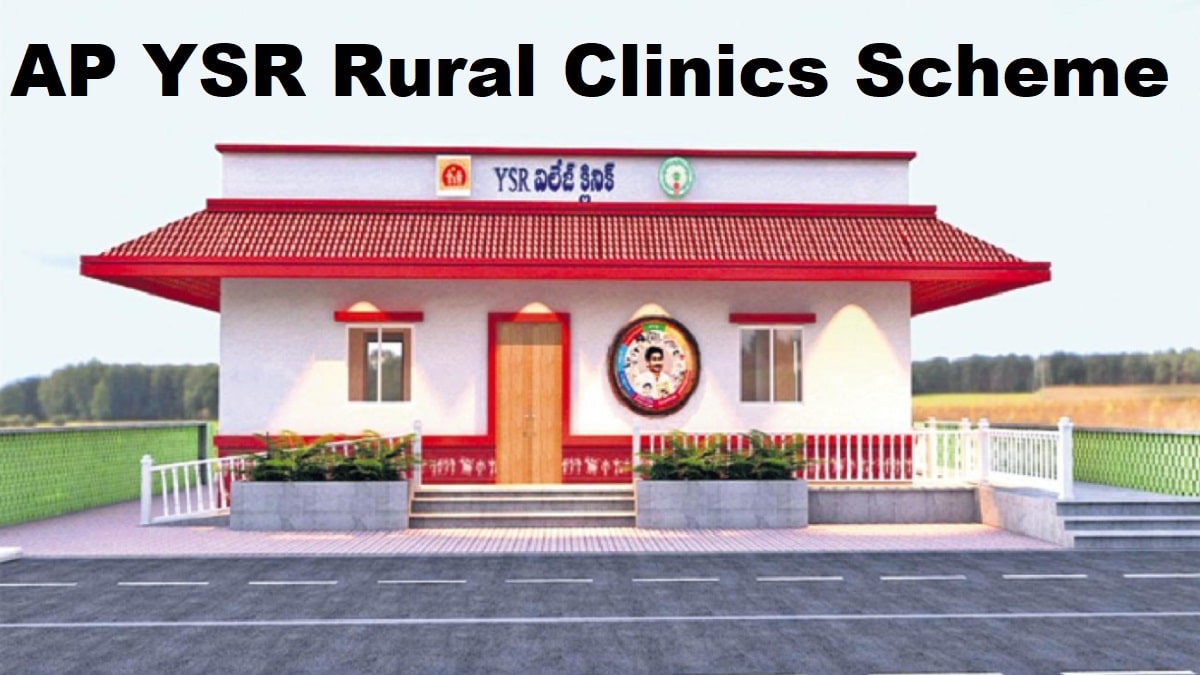
Andhra Pradesh government is going to launch AP YSR Rural Clinics Scheme 2026 to provide healthcare to doorstep of villagers. YS Jagan Mohan Reddy led AP govt. has come up with a unique concept of taking healthcare facilities to the doorstep of people in the villages by opening rural clinics. In this article, we will tell you about the complete details of YSR Rural Clinics Initiative.
AP YSR Rural Clinics Scheme 2026
YSR Rural Clinics are named after former chief minister of Andhra Pradesh, Dr Y S Rajasekhar Reddy. These village clinics would be formally launched by current chief minister YS Jagan Mohan Reddy on 26 January 2022 (Republic Day). Rural Clinics would pave a way forward in creation of health infrastructure at grassroot level.
Currently, Primary Health Centres (PHCs) takes care of healthcare services in the rural areas and these operates from mandal (block) headquarters. AP state govt. is planning to setup 10,032 YSR Rural Clinics to take healthcare services to villages. They are attached to the village secretariats and each clinic covers a population of 2,000.
Staff of YSR Rural Clinics
Each rural clinic to be opened under AP YSR Rural Clinic Scheme will comprise of the following staff members:-
- Mid-Level Health Providers (MLHPs) who have completed B.Sc. Nursing and Certificate Programme in Community Health (CPCH),
- Auxiliary Nursing Midwife (ANM) would report to rural clinics,
- ASHA (Accredited Social Health Activist) workers would report to the rural clinics.
Health Records in Village Clinics through Arogyasri Card
YSR Rural Clinics would be linked with PHCs regularly through video conferences. The village clinics under AP YSR Rural Clinics Scheme would also be linked to laboratories. The health records of the villagers will be available in the respective village clinics through their Arogyasri Cards. Using the QR code on Arogya Sri Cards, details of the people (health records) can be viewed easily.
These details can be accessed by the nearby PHC doctors, who would visit the villages from time to time. Health records in Village Clinics will be very useful while diagnosing and treating the cardholder. Every mandal will have 2 PHCs equipped with facilities and staff, including two doctors, and they will be integrated with emergency health services and ambulance services.
Facilities at YSR Rural Clinics
The main task of the YSR Rural Clinics staff is to provide 12 basic medical services and 14 types of basic diagnostic tests, and 64 types of medicines will be stored at the clinic. Further, 67 types of basic medical equipment will be available in these clinics, apart from telemedicine services.
AP Govt. Investment in Rural Clinics in Andhra Pradesh
The AP state government is investing Rs. 16,203 crore to revamp government hospitals and medical colleges across the state. The main objective of AP YSR Rural Clinics Scheme is to strengthen public healthcare and health Infrastructure. Chief Minister YS Jagan has already given the green signal for the recruitment of 14,200 doctors and paramedical staff this year, so that there is no staff crunch in the hospitals.
Source / Reference Link: https://www.hindustantimes.com/india-news/andhra-govt-plans-to-set-up-ysr-rural-clinics-to-take-healthcare-to-doorstep-of-villagers-101633794996119.html