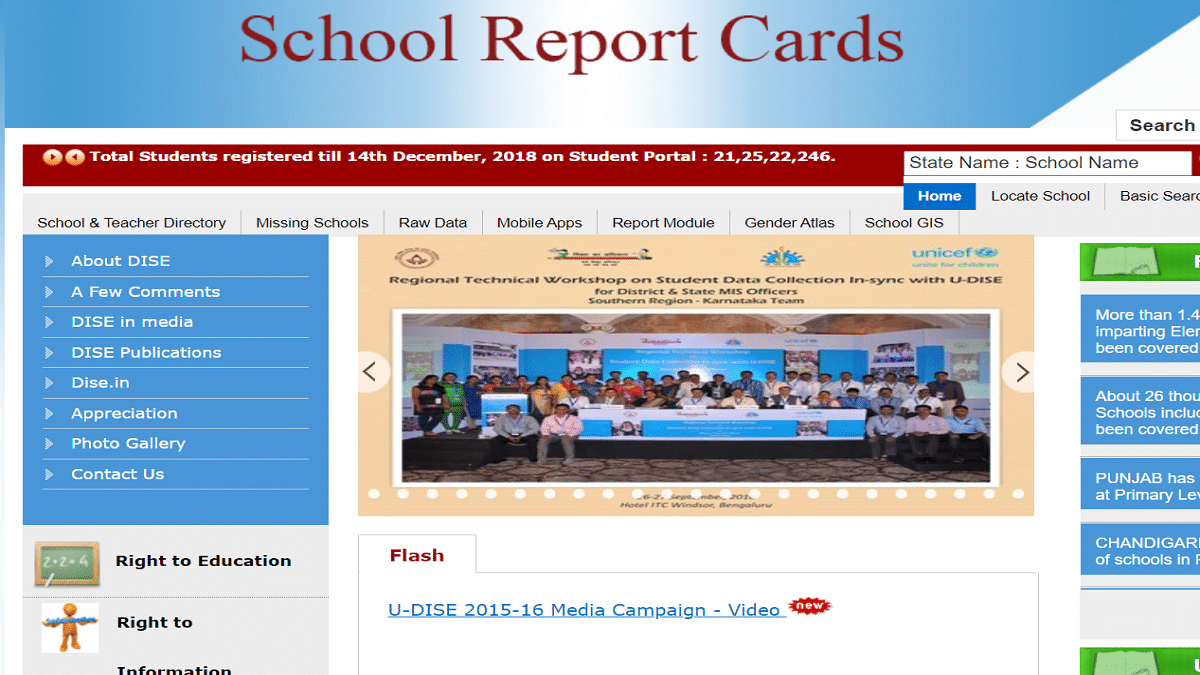
Shala Asmita Yojana (SAY) was a school student tracking system proposed by the central govt. to keep a record of the academic progress of students studying in about 15 lakh government and private schools across India. Under this plan, close to 25 crore students from class 1 to class 12 were to be tracked using their Aadhaar numbers.
Shala Asmita Yojana is not used as an active scheme name in 2026. The student tracking work that SAY was meant to do is now handled through UDISE+ (Unified District Information System for Education Plus) and APAAR ID (Automated Permanent Academic Account Registry), which cover attendance, learning outcomes and academic records for students across the country. Details on both are given further below on this page.
Shala Asmita Yojana (SAY) 2026 - Complete Details
Named Shala Asmita Yojana (SAY), the plan was meant to track over 25 crore students studying in around 15 lakh private and government schools. Through SAY, the education ministry wanted to find out why school students drop out and what steps could reduce the drop-out rate. SAY also wanted to improve the overall quality of education in both government and private schools.
What is Shala Asmita Yojana
ASMITA stands for All School Monitoring, Individual Tracing Analysis. The tracking system, or online database, was meant to carry all information about every student such as attendance, enrollment, mid-day meal service, learning outcomes and school infrastructure. Each student was to be tracked through their Aadhaar number.
About 65 percent of students between 5 and 18 years had Aadhaar numbers at the time. Students without an Aadhaar number were to get a unique identity number for tracking instead.
Student data was to be entered into the online system by local authorities in each state. The system was also expected to track leakage and corruption in mid-day meals.
Shala Asmita Yojana Registration at Student Portal
By 27 February 2018, around 8.52 crore school students had registered at the student portal using their Aadhaar number. By the same date, more than 21.57 crore students (with or without Aadhaar) had registered on the portal. SAY also planned to track 77 lakh teachers working across schools.
Shala Asmita Yojana Objectives - शाला अस्मिता योजना (SAY) का उद्देश्य
- SAY का उद्देश्य सरकारी स्कूलों में शिक्षकों या प्रिंसिपल के नहीं रहने पर शिक्षा नहीं मिल पाने की समस्या को दूर करना है.
- सूचना एवं संचार तकनीक (ICT) की मदद से छात्रों की मॉनिटरिंग करने की व्यवस्था की गयी है.
- स्कूल की पढ़ाई बीच में छोड़ देने की वजह तलाशना और उसे दूर करने के उपाय करना SAY का उद्देश्य है.
- स्कूल में छात्राओं के साथ अन्य स्टाफ की गतिविधियों पर भी SAY से नज़र रहेगी.
- SAY के जरिये स्कूल का रिपोर्ट कार्ड बनाया जा सकेगा.
- शाला अस्मिता योजना से मिड डे मील जैसी सरकारी योजना में गड़बड़ी की शिकायत पर कार्रवाई में मदद मिलेगी.
- स्कूलों में मौजूद शैक्षणिक संसाधनों पर अधिकारियों की नज़र रहेगी.
- SAY से देश भर के स्कूलों के छात्रों के व्यक्तिगत शैक्षिक प्रदर्शन का रिकॉर्ड रखा जा सकेगा.
- SAY से देशभर के स्कूलों के इन्फ्रास्ट्रक्चर पर भी नज़र रहेगी.
Implementation of Shala Asmita Yojana - शाला अस्मिता योजना (SAY) का क्रियान्वयन
- SAY के तहत छात्रों की गतिविधियों पर नज़र रखने के लिए उनके आधार का प्रयोग किया जाएगा.
- अगर किसी छात्र के पास आधार नहीं हुआ तो स्कूल के माध्यम से उसे यूनिक आइडेंटिटी नंबर (UIN) दिया जायेगा.
- SAY का संचालन केंद्र एवं राज्य सरकार मिलकर करेगी.
- स्कूल और छात्रों के साथ टीचिंग स्टाफ पर नज़र रखने का काम स्थानीय अधिकारी करेंगे.
Student Tracking In 2026 - UDISE+ and APAAR ID
Student records in India are now tracked mainly through UDISE+ and APAAR ID, both run by the Ministry of Education. UDISE+ collects school level data such as enrollment, infrastructure and teacher details from across the country every year. APAAR ID gives each student a permanent academic number that stores their records digitally, under the "One Nation One Student ID" plan linked to the National Education Policy 2020.
From the 2026-27 session, CBSE has made APAAR ID required for students of class 9 to 12 while registering for board exams. Registration without an APAAR ID will not be accepted for these classes. APAAR ID is not required for NEET UG 2026 or JEE Main, where students can still use Aadhaar, PAN or passport as identity proof. Some state entrance exams, such as Maharashtra CET 2026, have also started asking for APAAR ID along with Aadhaar authentication.
Parents and students can generate an APAAR ID through their school or directly at apaar.education.gov.in. Read the detailed APAAR ID registration guide on this website for the full process, documents required and benefits.
| Detail | Information |
|---|---|
| Scheme Name | Shala Asmita Yojana (SAY) |
| Proposed By | Ministry of Human Resource Development (now Ministry of Education) |
| Current Status | Superseded by UDISE+ and APAAR ID |
| Students Covered | Around 25 crore, class 1 to 12 |
| Current Tracking System | UDISE+ and APAAR ID |
| Official Website | apaar.education.gov.in |
FAQ's
Is Shala Asmita Yojana still active in 2026?
Shala Asmita Yojana is not used as an active scheme name anymore. Its goal of tracking students is now met through UDISE+ and APAAR ID.
What is APAAR ID
APAAR ID is a permanent academic number given to every student in India under the One Nation One Student ID plan. It stores academic records digitally and can be generated at apaar.education.gov.in.
Is APAAR ID required for board exams in 2026
Yes. CBSE has made APAAR ID required for class 9 to 12 students from the 2026-27 session while registering for board exams.