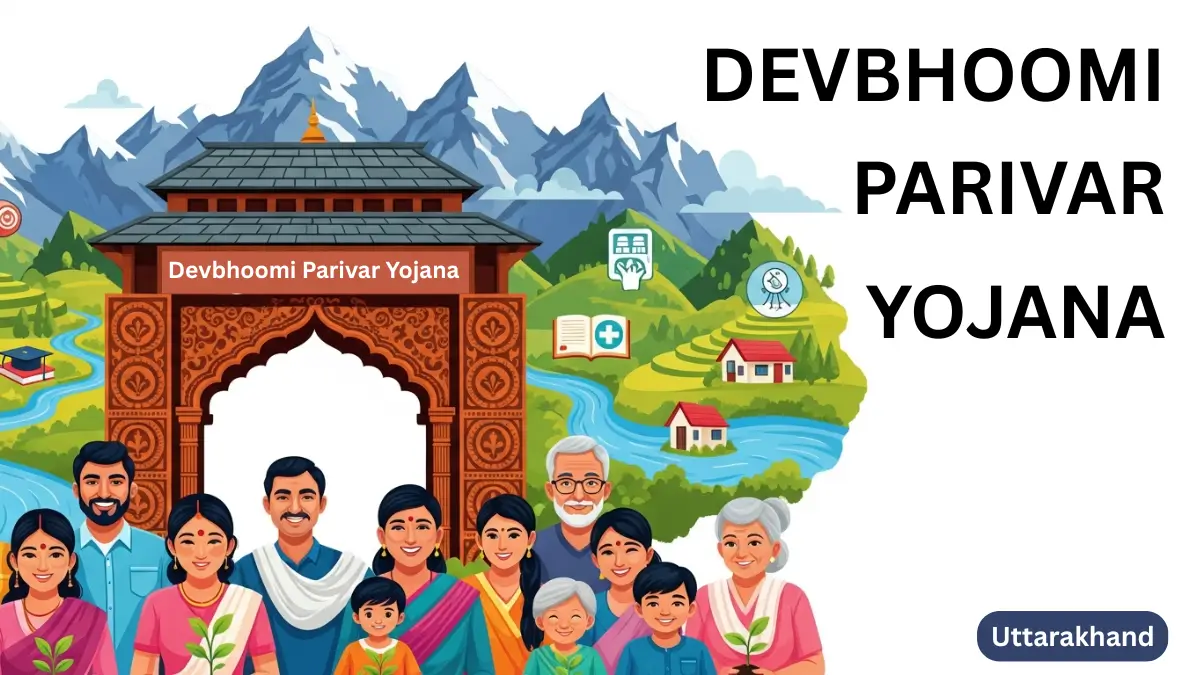
The Government of Uttarakhand, led by Chief Minister Pushkar Singh Dhami, has unveiled a landmark initiative, the Devbhoomi Parivar Yojana 2026, designed to create a robust and transparent system for delivering public welfare. Approved by the state cabinet, this scheme goes beyond simple benefit distribution, establishing an essential digital identity framework aimed at ensuring targeted governance while also addressing the sensitive political issue of demographic balance within the state.
This scheme is lauded by the ruling BJP as a "historic step" and a "milestone" in governance, promising to filter out ineligible recipients and ensure every eligible family receives one hundred percent benefit from state and central welfare programs.
Uttarakhand's Devbhoomi Parivar Yojana 2026 - A Unique Digital Identity
At the heart of the Devbhoomi Parivar Yojana is the creation of a Unique Family ID Card (Parivar Pehchan Patra) for every single family residing in Uttarakhand. This initiative represents a full effort to build a centralized, accurate Family Database of all residents.
The Unique Family ID will serve as a single gateway for families to interact with all government schemes. Instead of applying for benefits through multiple, cumbersome processes, the ID links a family directly to the state's data system.
Key Features of the Family ID
- Single-Click Eligibility: The system will automatically inform families which welfare schemes they are eligible for based on their recorded data (income, family size, location, etc.).
- Digital Passbook: Beneficiaries will receive a digital passbook detailing the schemes they have received benefits from, the benefits received, and any pending entitlements, ensuring complete transparency.
- Data Consolidation: It eliminates the need for repeated surveys or submitting the same documents for different schemes, simplifying the lives of citizens.
Addressing Demographics - The Dual ID System
The Devbhoomi Parivar Yojana is unique in its explicit acknowledgment of the state’s efforts to maintain its cultural and spiritual identity - an objective linked to concerns over demographic change. To achieve this, the scheme categorizes residents and issues two distinct types of unique identification cards:
- Permanent Family ID: Issued to the original and permanent residents (Sthayi Niwasi) of Uttarakhand. This category secures the highest priority and focus for scheme benefits, aligning with the state’s commitment to its indigenous population.
- Temporary Family ID: Issued to people from other states and their families who are currently residing in Uttarakhand. While enabling them to access eligible services, this distinction allows the administration to accurately track the population dynamics and distribution of resources.
Senior government officials, including the Home Secretary, confirmed that this system is instrumental in acquiring accurate demographic data to assess and counter potential instability caused by the influx of non-native populations, ensuring the state's cultural structure remains safe.
Revolutionizing Welfare and Governance
The implementation of the Family ID is expected to yield significant administrative and governance benefits:
1. Enhanced Transparency and Reduced Corruption
The primary administrative goal is to introduce absolute transparency in scheme delivery. By linking benefits directly to the unique ID and maintaining a digital record, the scheme drastically reduces the role of middlemen, curbing fraud and ensuring that subsidies and financial aid reach only the intended, eligible recipients. The ability to identify ineligible persons and outsiders attempting to benefit from state resources is a major component of this strategy.
2. Proactive Resource Allocation
The scheme transforms the government's approach from passive service provision to proactive welfare management. The compiled family database gives the administration real-time statistics on economic status, unemployment rates, and benefit uptake across different regions. This allows the government to identify pockets of deprivation or unemployment without conducting expensive, time-consuming surveys and promptly tailor new schemes to fill gaps in welfare coverage.
3. Efficient Data Management
The Planning Department has been tasked with overseeing the implementation and development of the dedicated official portal. The creation of a single, centralized database simplifies data collection, analysis, and auditing for all government departments, optimizing the utilization and management of public funds.
How to register for Devbhoomi Parivar Scheme
The Devbhoomi Parivar Yojana was swiftly approved by the cabinet, indicating the government's priority in its rollout. The scheme is to be managed through a dedicated digital platform.
- Official Portal: The registration and scheme details are being hosted on the official portal, likely https://eservices.uk.gov.in/ or devbhoomi.uk.gov.in.
- Registration Process: Families wishing to register will need to visit the official portal and provide details about all members of their household. Upon verification, the Unique Family ID will be issued.